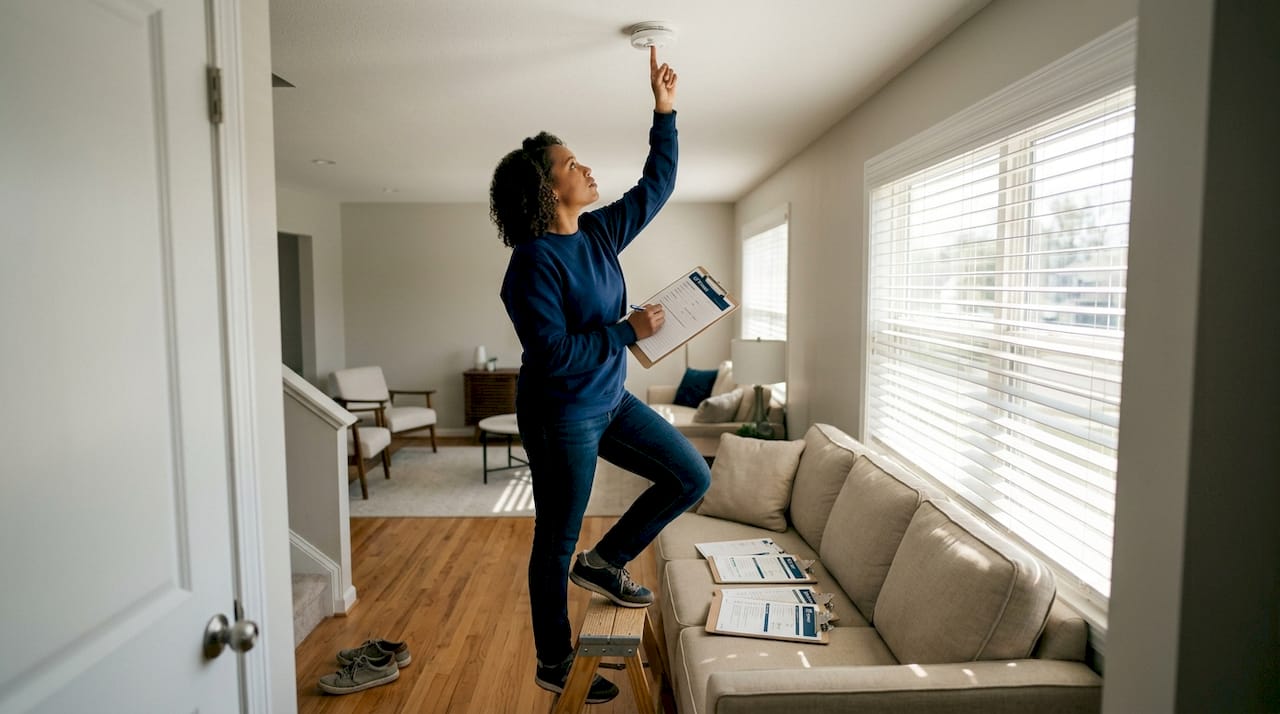
Many short-term rental hosts assume that getting a permit is the hardest part of compliance. It isn’t. Local jurisdictions often require a property inspection or a pre-inspection checklist as a condition of rental licensing, and failing to meet those standards can cost you your license, trigger fines, or force you to take your listing offline. The rules vary significantly from one city to the next, and even experienced hosts regularly misread what their local inspection actually requires. This guide explains what rental property inspection rules are, what inspectors look for, how to document everything correctly, and how to pass your next inspection on the first attempt.
Table of Contents
- What are rental property inspection rules?
- Key elements in typical rental inspection checklists
- Documentation and recordkeeping requirements
- How to succeed at your next inspection: Practical steps
- A common trap: Why most hosts miss the mark on inspections
- Need help staying compliant? Simplify your inspections with STR Comply
- Frequently asked questions
Key Takeaways
| Point | Details |
|---|---|
| Know local rules | Every city has its own inspection checklists and documentation requirements. |
| Documentation matters | Organize and retain your inspection records for at least three years to avoid compliance issues. |
| Map checklists correctly | Always refer to your city’s official inspection checklist to avoid costly errors. |
| Prepare before inspections | Conduct self-checks and fix issues before the official inspection to pass the first time. |
What are rental property inspection rules?
Rental property inspection rules are local laws and ordinances that require your property to meet minimum health, safety, and building code standards before and during its operation as a rental. They are not optional guidelines. They carry legal weight, and failing to comply can result in license denial, fines, or orders to cease operations.
Most cities and counties in the United States have adopted some version of these rules, though the specifics differ widely. Some jurisdictions require a one-time inspection before issuing a rental license. Others require recurring annual or biennial re-inspections to confirm the property remains in compliance. A third category involves tenant move-in and move-out inspections, which document the condition of the property at the start and end of each tenancy.
For short-term rental hosts specifically, the stakes are high. Your listing on Airbnb or VRBO depends on maintaining an active, valid license in most regulated markets. An inspection failure can break that chain quickly.
Here is a summary of the three main types of inspections you may encounter:
- Licensing inspections: Required before a city issues your initial rental permit. These confirm that the property meets baseline safety and habitability standards.
- Renewal inspections: Some cities require a physical inspection each time you renew your rental license, often annually or every two years.
- Self-inspections: Certain municipalities allow or require landlords to conduct their own inspections using a standardized form and submit the results to the city.
“Rental property inspection rules are not bureaucratic formalities. They are the legal baseline that determines whether your property can legally operate as a rental. Treating them as a checklist to rush through is one of the most common and costly mistakes hosts make.”
For a broader overview of property inspection rules across U.S. markets, it helps to understand that no two cities use the exact same form or criteria. That local variation is precisely why generic advice so often falls short.
Key elements in typical rental inspection checklists
With a clear idea of what inspection rules are, it is critical to see what inspectors actually look for and how checklists might differ from one city to another. Knowing the standard items gives you a strong foundation, but you must always verify against your specific city’s official form.
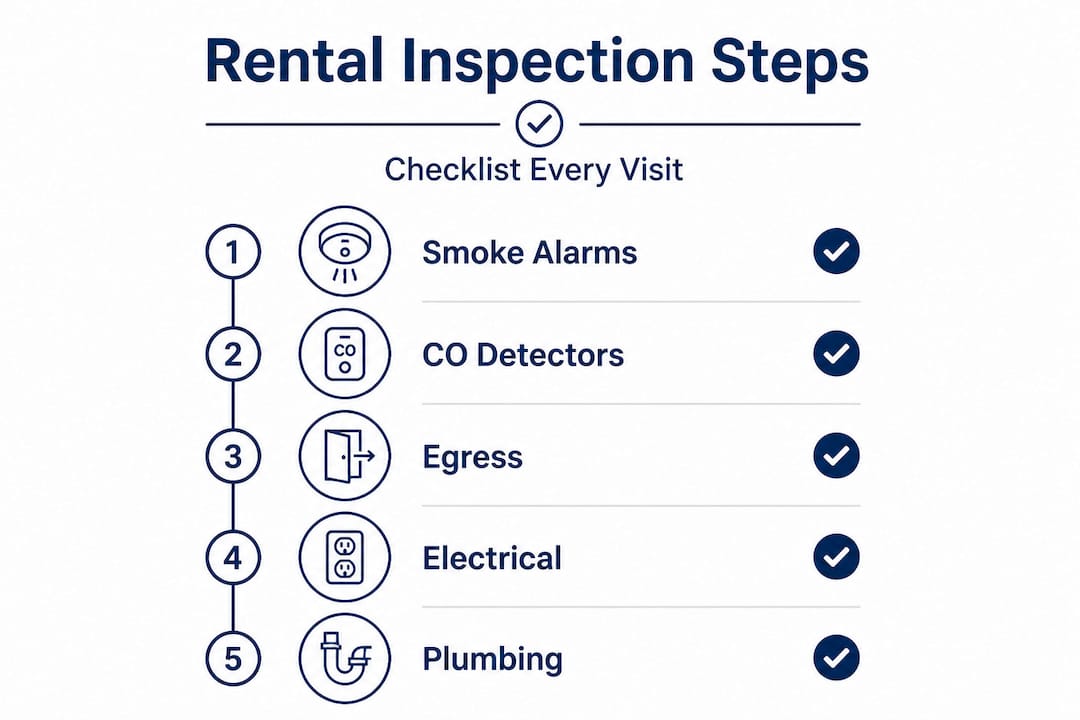
Inspections typically include smoke detectors, carbon monoxide detectors, egress, electrical, plumbing, and code deficiencies as core categories. These items appear on virtually every rental inspection checklist in the country, regardless of city size or location. Beyond these basics, federal guidelines add further requirements. HUD’s Housing Quality Standards mandate working smoke detectors on each floor of a dwelling, a requirement that applies to federally subsidized housing programs but also signals the national baseline expectation for rental safety.
Here is a comparison of standard local checklist items versus federal HUD Housing Quality Standards (HQS):
| Category | Typical local checklist | HUD Housing Quality Standards |
|---|---|---|
| Smoke detectors | Required on each level | Required on each floor |
| Carbon monoxide detectors | Required near sleeping areas | Required per applicable codes |
| Egress windows and doors | Minimum size and operability | Emergency egress required |
| Electrical systems | No exposed wiring, GFCI outlets | Adequate outlets, no hazards |
| Plumbing | No leaks, hot/cold water | Working fixtures, water supply |
| Heating systems | Functional heat source | Adequate heat in all rooms |
| Structural integrity | No major defects | Safe structure required |
| Handrails and stairs | Required on applicable stairs | Required where applicable |
One detail that trips up many hosts is the pass/fail/refer system used by some cities. A “pass” means the item meets code. A “fail” means it does not and must be corrected before the license is issued or renewed. A “refer” designation is different. It means the item needs further review by a specialist, such as a licensed electrician or plumber, before the inspector can make a final determination. Hosts who see “refer” on their inspection report and do nothing are making a serious error. That item is not resolved until the specialist’s report is submitted and accepted.
Pro Tip: Never rely on a generic rental inspection checklist you find online. Download the official checklist directly from your city’s housing or licensing department website. The specific language and categories on that form are what your inspector will use.
Common items that frequently cause problems during inspections include:
- Smoke and CO detectors: Missing, expired, or improperly placed detectors are the most cited deficiencies nationwide.
- Egress windows: Basement bedrooms and sleeping lofts often fail because the window opening does not meet minimum size requirements for emergency exit.
- GFCI outlets: Ground fault circuit interrupter outlets are required in bathrooms, kitchens, garages, and outdoor areas in most codes. Many older properties lack them.
- Handrails: Missing or loose handrails on stairs are a frequent fail item, especially in older homes.
- Water heater strapping: In seismic zones, water heaters must be strapped to the wall. This is often overlooked entirely.
For details about pre-inspection checklists specific to your market, reviewing city-published guides before your inspection date is always the right move.
Documentation and recordkeeping requirements
Understanding what to check is only half the battle. You also need to know how to document everything for legal protection and ongoing compliance. This is where many otherwise prepared hosts fall short.

Some cities codify landlord self-inspection and record retention for at least three years, meaning you are legally required to keep your inspection records on file and available for review. This is not just a best practice. In cities with these requirements, failing to produce records during an audit or dispute can result in license suspension, even if your property is otherwise in good condition.
Here is a step-by-step approach to building a solid documentation system:
- Complete the official inspection form. Use your city’s form, not a generic template. Fill it out completely, noting the date, property address, and your name as the inspector or the inspector’s name if it was a municipal visit.
- Take timestamped photos. Photograph every item on the checklist, including items that pass. Photos with embedded timestamps provide strong evidence in any dispute.
- Record deficiencies and corrections. If something fails, document what the deficiency was, what corrective action you took, and the date it was resolved. Keep receipts from contractors.
- Store records in two locations. Keep a digital copy in cloud storage and a physical copy in a dedicated file folder. If your city requires three years of records, maintain at least that much.
- Log all move-in and move-out inspections separately. These are distinct from licensing inspections. Keep them in a separate folder labeled by tenant name and dates of tenancy.
“Documentation is your legal defense. If a tenant disputes the condition of a property at move-out, or if a city auditor questions your compliance history, your records are the only thing standing between you and a penalty.”
For short-term rental hosts, the documentation burden is slightly different than for long-term landlords. You may not have traditional move-in/move-out inspections for each guest, but you still need to maintain records of your licensing inspections, any municipal notices, and corrective actions taken. Federal programs like HUD’s housing assistance programs intensify documentation requirements further, requiring detailed records for subsidized rentals that go beyond what most local codes mandate.
Solid compliance documentation practices protect you not just from city penalties but also from platform-level consequences. Airbnb and VRBO both reserve the right to de-list properties that cannot demonstrate valid licensing, and having organized records makes that process straightforward.
How to succeed at your next inspection: Practical steps
Knowing the rules and documenting inspections is only useful if you put it into action. Here is how to ensure you pass on the first try and stay organized going forward.
Mapping your local checklist precisely to your city’s inspection form is the single most important preparation step. Generic guides miss city-specific items, and those missed items are exactly what inspectors cite most often.
Follow these steps before your official inspection:
- Download your city’s official checklist. Search your city’s housing department or code enforcement website. If you cannot find it online, call and request it directly.
- Conduct a self-inspection at least two weeks before the official date. Walk through every room using the official form. Mark each item as pass, fail, or needs attention.
- Address all fail items immediately. Prioritize smoke and CO detectors, egress, and electrical issues first, as these are the most commonly cited and the most likely to result in a failed inspection.
- Follow up on any “refer” items. Schedule the appropriate licensed professional, complete the work, and obtain written documentation of the repair or clearance.
- Organize your documentation packet. Bring your completed self-inspection form, photos, contractor receipts, and any prior inspection reports to the official inspection.
Here is a quick reference table of do’s and don’ts for inspection day:
| Do | Don’t |
|---|---|
| Use the city’s official checklist | Use a generic online template |
| Take timestamped photos of every item | Rely on memory alone |
| Address all fail items before the visit | Wait until after the inspection to fix issues |
| Follow up on “refer” items with a licensed pro | Assume “refer” means the item passed |
| Keep records for at least three years | Discard records after the inspection |
| Schedule a self-inspection two weeks early | Wait until the night before to prepare |
Pro Tip: Check your smoke detector batteries and test each unit the day before your inspection. It sounds basic, but dead batteries are one of the top reasons hosts fail their first inspection and have to schedule a costly re-inspection.
For a full inspection report overview tailored to your specific market, using a compliance tool that tracks your city’s requirements saves significant time and reduces the risk of missing a local-specific item.
A common trap: Why most hosts miss the mark on inspections
Having covered step-by-step preparation, it is worth addressing why so many hosts still fall short, even when they believe they have done everything right.
The core problem is that most online guides, forums, and even some real estate courses treat rental property inspections as a universal process. They list the standard items, tell you to fix what is broken, and move on. What they almost never address is the local variation that determines whether you actually pass.
You need to map your checklist precisely to your city’s inspection form and track what is pass/fail versus “refer.” This distinction matters enormously. A host who fixes every item marked “fail” but ignores two items marked “refer” will still not receive their license. The inspector cannot close out the inspection until those refer items are resolved by a qualified professional and the documentation is submitted.
The second trap is treating documentation as an afterthought. Hosts who fix every physical deficiency but keep no records are one audit away from a serious problem. Cities with three-year retention requirements can and do ask for historical records during license renewals or complaint investigations. If you cannot produce them, the burden of proof falls against you.
For local checklist mapping details that reflect your specific city’s requirements, the difference between a generic approach and a localized one is often the difference between passing on the first attempt and paying for multiple re-inspections.
The third and most underappreciated trap is assuming that passing once is enough. Inspection standards change. Cities update their codes, adopt new federal guidelines, or add new categories to their forms. A host who passed an inspection two years ago and has not reviewed the current checklist may be operating under outdated assumptions. Staying current requires active monitoring, not a one-time effort.
Need help staying compliant? Simplify your inspections with STR Comply
You now have a clear picture of what rental property inspection rules require, what inspectors look for, and how to document everything correctly. Putting all of that into practice across one property is manageable. Doing it across multiple listings in different cities is where the complexity multiplies fast.

STR Comply is built specifically for hosts and property managers who need to stay on top of inspection obligations, permit requirements, and regulatory changes without spending hours on legal research. You can run a compliance check in seconds to see exactly what your city requires, including inspection standards, permit conditions, and documentation rules. When you need a formal record of your compliance status, you can generate a compliance report that reflects your specific market’s current requirements. Paid plans include permit tracking, renewal alerts, and regulatory update notifications so you are never caught off guard by a rule change. Take the guesswork out of compliance and keep your listings active and protected.
Frequently asked questions
What happens if I fail a rental property inspection?
Most cities allow a correction period and schedule a re-inspection, but repeated failures can trigger fines, license suspension, or orders to vacate. Acting on deficiencies quickly and documenting corrections is essential to avoiding escalating consequences.
How often do I need to keep rental inspection records?
Three-year retention is codified in some city codes for move-in, move-out, and self-inspection records. Always verify your local requirements, as some jurisdictions may require longer retention periods.
What are the most commonly failed items during inspections?
Smoke detectors, CO detectors, and egress windows or doors are the most frequently cited deficiencies. GFCI outlets and handrails are also common fail items in older properties.
Are self-inspections enough to meet compliance standards?
Landlord self-inspection is required in some city codes, but many jurisdictions also mandate official municipal inspections. Both types require proper documentation, and self-inspection results must typically be submitted to the city on the official form.
Recommended
Check your city's STR regulations
Free compliance reports for 100+ US cities. Permits, taxes, zoning — all in one place.
Check My Address — Free