
An Airbnb legal compliance list is a structured set of mandatory permits, safety standards, tax filings, and regulatory disclosures that short-term rental hosts must secure and maintain to legally operate and avoid listing removal or fines. In the industry, this is also called a short-term rental (STR) regulatory compliance framework. Whether you manage one property or a portfolio of twenty, working through this Airbnb compliance checklist guide is not optional. Cities from Toronto to Amsterdam now enforce registration requirements with automated platform validation, and the consequences of non-compliance include delisting, financial penalties, and legal liability. This guide covers every major item on the compliance list, with jurisdiction-specific examples and 2026 regulatory updates built in.
1. Mandatory permits and registrations
The foundation of any Airbnb legal compliance list starts with confirming that your property holds the correct local permits. Most municipalities require a short-term rental permit or business license before you can legally host guests. The RedAwning 2026 checklist confirms that hosts must verify city permits, zoning classifications, occupancy limits, and HOA or lease restrictions before listing. Skipping this step exposes you to fines and immediate delisting.
Zoning restrictions define whether your property type and location are eligible for STR activity at all. Some cities restrict STRs to owner-occupied primary residences. Others prohibit them in specific zoning districts entirely. Review your local zoning code directly with the planning department, not just through third-party summaries, since codes change frequently.

For hosts with European properties, EU Regulation 2024/1028 takes effect May 20, 2026, and requires every host to obtain a registration number that platforms like Airbnb must validate before a listing goes live. Platforms that cannot verify a valid registration number are required to delist the property. This shifts registration from a background administrative task to a hard operational dependency.
Pro Tip: Verify the exact format your municipality requires for registration numbers before entering them in your Airbnb listing fields. A single character error or outdated number can trigger automated delisting under platform validation systems.
For a detailed breakdown of licensing requirements by property type and jurisdiction, the Strcomply blog provides jurisdiction-specific guidance.
2. Zoning and occupancy restrictions
Zoning compliance is a separate layer from permit compliance, and many hosts confuse the two. A permit grants you permission to operate. Zoning determines whether that operation is legal in your specific location. You need both. Consult your city’s zoning map and confirm your property’s classification before applying for any permit.
Occupancy limits are set at the municipal level and sometimes at the state level. These limits cap the number of guests per night and sometimes restrict the number of rental nights per year. Exceeding these limits is a common violation that triggers complaints from neighbors and enforcement action from city inspectors.
HOA rules and lease agreements add another layer. Even if the city permits STR activity, your HOA bylaws or lease contract may prohibit it. Violating these agreements can result in lease termination or HOA fines that are entirely separate from municipal penalties. Review both documents before listing. For a practical overview of zoning compliance rules, Strcomply’s zoning guide covers the most common restrictions hosts encounter.
3. Safety and health compliance standards
Safety compliance is both a legal obligation and a direct liability issue. Airbnb and most local laws mandate specific safety devices including multi-pack smoke detectors, carbon monoxide alarms, and ABC fire extinguishers on every floor, with monthly testing and scheduled replacements. Failing to maintain these devices is one of the most frequently cited violations during municipal inspections.
Beyond devices, hosts must post clear fire escape routes and emergency contact information in visible locations inside the property. Some jurisdictions require accessibility features for guests with disabilities, particularly for properties that operate at a commercial scale. Check your local building code for specific requirements.
Toronto’s compliance framework offers a useful model. The city conducts annual compliance inspections that require host presence and confirm both safety equipment and registration validity. This means your safety compliance is verified on record, not just self-attested. Many U.S. cities are moving toward similar inspection protocols.
Airbnb requires hosts to complete regulatory attestations within the platform confirming that safety standards are met. These attestations do not replace local inspections but they are a contractual requirement. Failing to complete them can restrict your listing’s visibility or trigger a review.
Pro Tip: Schedule a formal safety walkthrough every six months and keep a written log of device tests, replacements, and any maintenance performed. This documentation is your defense if a guest files a complaint or a city inspector requests records.
For more on property inspection rules specific to U.S. hosts, Strcomply’s inspection guide covers what to expect and how to prepare.
4. Short-term rental tax obligations
Tax compliance is the area where hosts most frequently fall short, often because they assume that Airbnb’s tax collection service covers their full obligation. It does not. Airbnb collects and remits certain taxes on behalf of hosts in many jurisdictions, but the host remains legally responsible for filing reports and maintaining records.
The two most common tax types are the transient occupancy tax (TOT), used across many U.S. cities, and the Municipal Accommodation Tax (MAT), used in Canadian cities like Toronto. Toronto’s Good Operator Guide specifies that hosts must collect an 8.5% MAT rate during 2025 and 2026 and file quarterly reports online, even when Airbnb collects and remits the tax on their behalf. This distinction matters because missing a filing deadline creates a compliance violation regardless of whether the tax itself was paid.
| Jurisdiction | Tax Type | Rate | Reporting Period |
|---|---|---|---|
| Toronto, Canada | Municipal Accommodation Tax (MAT) | 8.5% (2025–2026) | Quarterly |
| California, USA | Transient Occupancy Tax (TOT) | Varies by city (typically 10–15%) | Monthly or quarterly |
| EU Member States | VAT and local accommodation levies | Varies by country | Monthly or annually |
Detailed recordkeeping of all accommodation transactions, including revenue totals and any exemptions claimed, is a requirement in Toronto and most other jurisdictions with active STR tax programs. Hosts who cannot produce transaction records during an audit face back-tax assessments plus penalties. Keep digital records of every booking, payout, and tax remittance for a minimum of three years.
5. Platform compliance features and listing data accuracy
Airbnb and other platforms now function as active compliance enforcement partners, not passive listing services. Under EU Regulation 2024/1028, platforms transmit monthly data on host bookings and guest identities to national Single Digital Entry Points in EU member states. This shifts enforcement from reactive to preventive, making non-compliance automatically visible to authorities without requiring a complaint or inspection trigger.
In the U.S., platforms enforce compliance through registration number validation fields built into the listing setup process. A mismatch or expired registration number on a listing can trigger automated delisting under platform validation systems. This is not a manual review process. It is an automated check that runs continuously.
Best practices for maintaining data accuracy across your listings:
- Review your registration number entry in every listing at least once per quarter.
- Update permit expiration dates in your listing fields immediately upon renewal.
- Cross-check the name on your permit against the name on your Airbnb account to prevent identity mismatches.
- Monitor platform notification emails for compliance alerts, since these often precede enforcement action by 30 days.
- Keep a copy of your current permit or registration certificate accessible digitally for rapid upload if a platform requests verification.
Data parity between your permit records and listing data is a contractual obligation on most platforms and triggers automated review when discrepancies are detected. Treat your listing compliance fields with the same attention you give to pricing and availability.
6. Ongoing compliance actions and recordkeeping
Compliance is not a one-time setup task. Short-term rental laws change at the municipal level multiple times per year in active markets. Hosts who treat compliance as a launch checklist rather than an ongoing operational responsibility are the ones who get caught off guard by new permit requirements or updated tax rates.
The 2026 STR regulations checklist from STR Specialist advises annual reviews of local regulations, consultation with local authorities or legal advisors when rules change, and systematic document retention. This is the minimum standard for any host operating in a regulated market.
Key ongoing compliance actions to build into your operations:
- Conduct an annual review of your local STR ordinance and permit requirements every January.
- Set calendar reminders for permit renewal deadlines at least 60 days in advance.
- File all tax reports on schedule, independent of whether the platform remits on your behalf.
- Retain inspection reports, permit certificates, and tax filing confirmations for at least three years.
- Subscribe to your city’s planning or licensing department email list to receive regulatory update notices directly.
Pro Tip: Use a digital compliance calendar or a platform like Strcomply to centralize permit renewal dates, tax filing deadlines, and inspection schedules. A missed renewal is far more expensive than the cost of a reminder system.
For hosts managing multiple properties, the STR portfolio management guide on the Strcomply blog covers how to scale compliance tracking without losing accuracy.
Key takeaways
A complete Airbnb legal compliance list covers permits, safety standards, tax filings, platform data accuracy, and ongoing recordkeeping as continuous operational requirements, not a one-time setup.
| Point | Details |
|---|---|
| Permits come first | Confirm your STR permit, zoning classification, and HOA restrictions before listing. |
| Safety requires documentation | Maintain written logs of device tests and inspections to defend against complaints or audits. |
| Tax filing is your responsibility | File quarterly or monthly tax reports even when Airbnb collects and remits on your behalf. |
| Registration numbers are operational | An expired or misformatted registration number triggers automated delisting on major platforms. |
| Compliance is continuous | Review local regulations annually and set renewal reminders at least 60 days in advance. |
What most hosts get wrong about compliance
After working through compliance frameworks across dozens of jurisdictions, the single most common mistake I see is treating compliance as paperwork rather than operations. Hosts obtain a permit, enter a registration number, and consider themselves done. Then six months later, the permit expires, the number becomes invalid, and the listing gets delisted automatically. No warning, no grace period.
The second mistake is assuming that Airbnb’s tax collection service covers the full tax obligation. Toronto’s MAT rules make this explicit: even when Airbnb remits the tax, the host must still file the quarterly report. Most hosts in Toronto do not know this until they receive a notice of non-compliance from the city. The platform and the municipality are two separate compliance relationships, and you are responsible for both.
What actually works is building compliance into your operating calendar the same way you manage pricing or maintenance. Set hard deadlines for permit renewals, tax filings, and safety checks. Keep digital copies of every document. Review your local ordinance once a year, because the rules you followed when you launched may not be the rules in effect today.
The hosts who stay out of trouble are not the ones with the most legal knowledge. They are the ones with the most consistent processes.
— Jure
Manage your Airbnb compliance with Strcomply
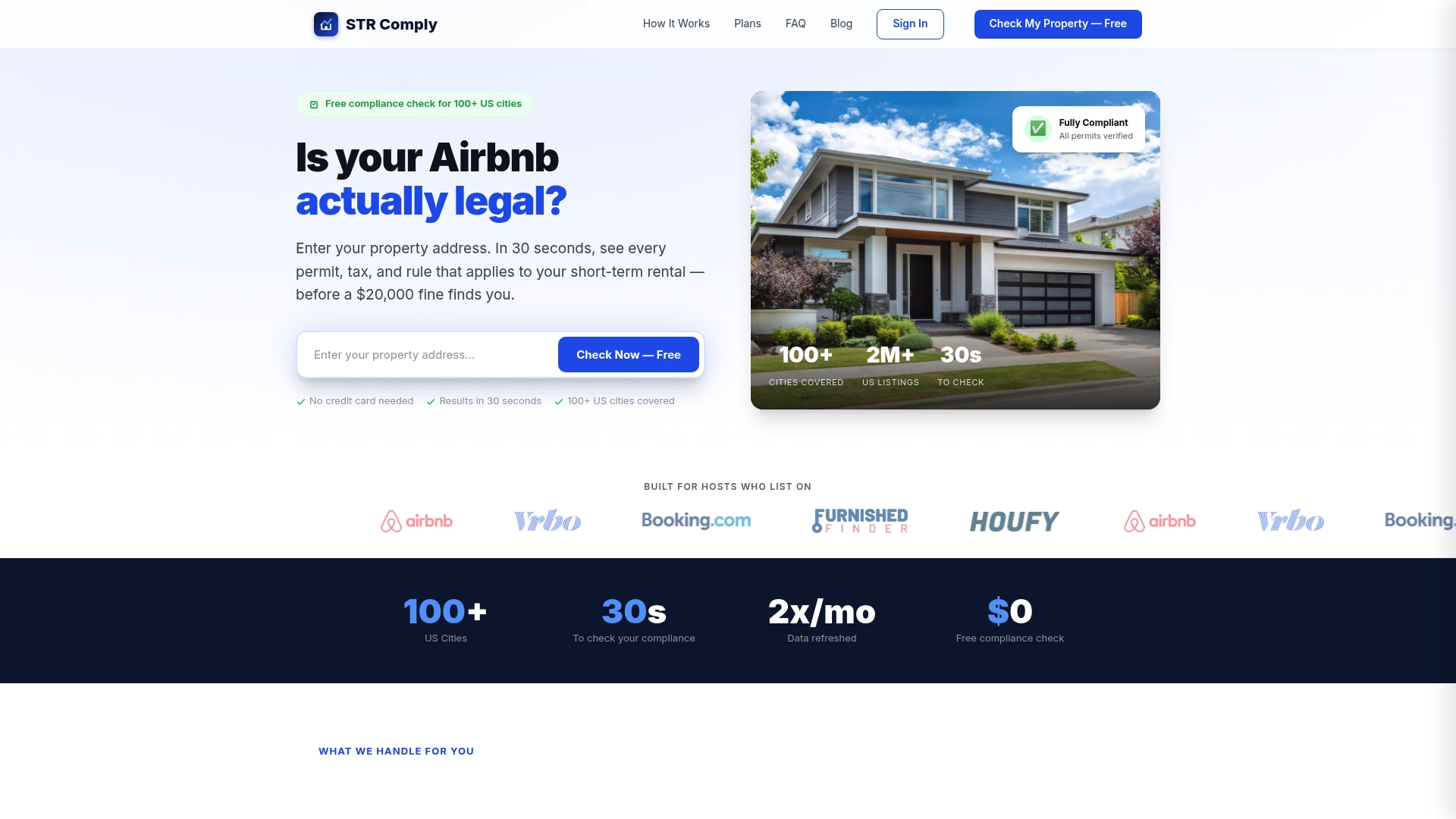
Strcomply is built specifically for short-term rental hosts and managers who need to track permits, registration numbers, tax filing deadlines, and inspection schedules across one property or an entire portfolio. The platform provides city-specific compliance summaries covering permit requirements, tax obligations, and operational restrictions, so you spend less time researching and more time hosting.
Paid plans include a centralized dashboard with renewal alerts, regulatory update notifications, and document storage, giving you a single system of record for every compliance obligation. Whether you operate in one U.S. city or across multiple markets, Strcomply keeps your listings protected from the automated enforcement systems that platforms and municipalities now run continuously. Visit Strcomply to check your listing’s compliance status for free.
FAQ
What permits do Airbnb hosts need?
Most municipalities require a short-term rental permit or business license before you can legally list a property. Zoning approval and, in some cases, a separate HOA or lease authorization are also required.
Does Airbnb collect taxes for hosts?
Airbnb collects and remits certain taxes in many jurisdictions, but hosts remain legally responsible for filing tax reports independently. Toronto’s MAT rules, for example, require quarterly host filings even when Airbnb handles remittance.
What happens if my registration number is wrong on Airbnb?
An expired or incorrectly formatted registration number triggers automated delisting on Airbnb and other platforms that enforce registration validation. Verify your number in your listing fields at least once per quarter.
How often should hosts review their compliance status?
Hosts should conduct a full compliance review at least once per year, with permit renewal checks at least 60 days before expiration. Markets with active regulatory change may require more frequent monitoring.
What is EU Regulation 2024/1028 and who does it affect?
EU Regulation 2024/1028, effective May 20, 2026, requires all hosts with European properties to hold a valid registration number that platforms must verify. Platforms transmit monthly booking and identity data to national authorities, making non-compliance automatically detectable.
Recommended
Check your city's STR regulations
Free compliance reports for 100+ US cities. Permits, taxes, zoning — all in one place.
Check My Address — Free