
City-specific host regulations are mandatory municipal rules that short-term rental (STR) hosts must follow to legally list and operate a property. These rules vary sharply from one city to the next, covering permits, taxes, zoning restrictions, occupancy limits, and safety requirements. New York City’s Office of Special Enforcement, Houston’s STR certification program, and Los Angeles’s home-sharing ordinance each represent distinct frameworks with real financial consequences for non-compliance. Strcomply tracks these frameworks across U.S. markets so hosts can identify exactly what their city requires before they list.
1. What are the most critical city-specific host regulations?
Every STR host must understand five core regulatory categories. Missing any one of them puts your listing at risk of fines, suspension, or removal from booking platforms.
- Registration and licensing. Most cities require a short-term rental permit or business license before you accept a single booking. Permit fees, renewal timelines, and application documents vary by municipality.
- Primary residence rules. Many cities restrict STR activity to a host’s primary residence. This means you cannot rent out a second home or investment property under the same rules that apply to your main address.
- Occupancy limits. Cities cap the number of guests per stay. New York City, for example, limits occupancy to two guests under Local Law 18. That cap applies regardless of the property’s size.
- Taxation and reporting. Transient occupancy tax (TOT) applies in most U.S. cities. Hosts must register with the local tax authority, collect the correct rate from guests, and remit it on a set schedule.
- Safety and insurance mandates. Boston requires $1 million in liability coverage and a nine-month primary residence stewardship period. Smoke detectors, carbon monoxide alarms, and fire extinguishers are standard requirements in most cities.
Pro Tip: Review your city’s municipal code directly, not just the summary on a booking platform. Platform-provided compliance guides are often outdated by several months.
2. How do major U.S. cities differ in their short-term rental rules?

The gap between city frameworks is wider than most hosts expect. A rule that applies in Manhattan does not apply in Houston, and a permit valid in Los Angeles carries no weight in Miami.
| City | Key rule | Notable requirement |
|---|---|---|
| New York City | Primary residence only, two-guest cap | Host must be physically present during stays |
| Houston | STR certificate required | Human trafficking prevention training mandatory |
| Los Angeles | Home-sharing permit, night caps | Two permit tiers: primary and extended home sharing |
| Miami | Multiple permits required | State preemption limits some local restrictions |
| Boston | Primary residence, insurance mandate | $1 million liability coverage required |
| Kansas City | Event-specific permit available | $50 Major Event permit valid May 3 through July 31, 2026 |
New York City’s Local Law 18 is among the strictest STR frameworks in the country. Hosts must register as natural occupants of the property, provide proof of primary residency, and remain on-site during every guest stay. The city allows a 30-day window to correct application deficiencies, but unresolved issues result in denial.
Houston took a different approach for 2026. The city launched its STR enforcement program on april 1, 2026, after a 90-day grace period for registration. A standout requirement is mandatory human trafficking prevention training, which achieved 83% compliance by april 2026. That figure reflects serious municipal commitment to enforcement, not just paperwork.
Los Angeles separates hosts into two categories. Standard home-sharing permits cover occasional rentals of your primary residence. Extended home-sharing permits allow more nights per year but require a separate application and higher scrutiny. Neither permit covers investment properties rented without the owner present.
Miami sits in a unique position because Florida state law limits how aggressively cities can restrict STRs. Still, Miami requires multiple local permits, and hosts must navigate both city and county requirements simultaneously. Understanding which level of government controls which rule is non-negotiable there.
3. Common challenges and misconceptions about local rental laws
Most compliance failures come from misunderstanding the scope of a city’s rules, not from deliberate violations. These are the most frequent mistakes hosts make.
- Applying city center rules to suburban properties. New STR hosts often assume that a permit valid in the urban core covers nearby suburbs. Suburban municipalities frequently have separate licensing and tax requirements. Always verify the specific jurisdiction for each property address.
- Confusing state law with local ordinances. Local ordinances impose stricter requirements than state landlord-tenant laws in most cases. Legal analysts confirm that local law holds supremacy in rental regulation practice. A state-level exemption does not override a city permit requirement.
- Treating registration as a one-time task. Many cities require annual renewal, updated documentation, and periodic inspections. Hosts who register once and forget often discover their permit has lapsed only after a complaint or audit.
- Underestimating primary residence documentation. NYC enforces primary residency through utility bills, lease agreements, and host physical presence during stays. Hosts who cannot produce this documentation face permit denial or revocation.
- Ignoring digital monitoring. Cities increasingly partner with booking platforms for real-time data sharing to monitor compliance beyond initial permit issuance. California’s SB 346 compels monthly booking data transfers from platforms to cities. Hosts who assume their activity goes unnoticed are operating on outdated assumptions.
Pro Tip: Check whether your city has a data-sharing agreement with Airbnb or VRBO. If it does, your booking history is visible to local enforcement agencies in near real time.
4. Practical steps to manage compliance with city rental guidelines
Compliance is not a one-time checkbox. It requires an ongoing process that keeps pace with regulatory updates, permit renewals, and documentation requirements.
- Audit your current permits. Pull every permit, license, and tax registration tied to each property. Confirm expiration dates and renewal requirements for the current calendar year.
- Monitor municipal websites regularly. City councils update STR ordinances with little advance notice. Set a monthly calendar reminder to check your city’s official STR page for amendments.
- Maintain a documentation file for each property. Store utility bills, lease agreements, insurance certificates, and inspection records in one place. NYC-style primary residence audits can happen at any time, and you need documents ready within days.
- Use a host compliance checklist. A structured checklist reduces the risk of missing a renewal deadline or overlooking a new requirement. Review it quarterly, not just at permit renewal time.
- Understand your platform’s data-sharing obligations. Read the rental platform regulation terms for Airbnb and VRBO in your market. Knowing what data your platform shares with local authorities helps you anticipate enforcement activity.
- Consult a local attorney for complex markets. Miami, New York City, and Los Angeles each have layered regulatory frameworks where city, county, and state rules intersect. A one-hour consultation with a local real estate attorney can prevent months of compliance problems.
- Review zoning before acquiring new properties. Zoning determines whether an STR is legally permitted at a given address. Understanding zoning laws for short-term rentals before purchase prevents costly mistakes that no permit can fix after the fact.
For real estate investors expanding into new markets, a property lead checklist that includes regulatory due diligence is a practical starting point before any acquisition.
5. How event-specific permits affect city-specific rental permits
Major sporting and cultural events create a separate permit category that many hosts overlook. These temporary licenses offer fast access to the STR market but carry the same compliance obligations as standard permits.
- Lower cost, limited duration. Kansas City’s Major Event STR permit costs $50 and runs from may 3 through july 31, 2026, timed to the FIFA World Cup. That price point attracts first-time hosts who may not realize the full scope of what the permit requires.
- Full zoning and safety compliance still applies. Event-specific permits do not exempt hosts from zoning restrictions, safety inspections, or insurance mandates. A host who skips the liability coverage requirement because the permit is “temporary” faces the same penalties as a standard permit holder.
- Proof of eligibility is still required. Cities issuing event permits still verify that the property meets zoning criteria and that the host holds any underlying licenses required for STR activity.
- Tax obligations begin immediately. Transient occupancy tax applies from the first night of a guest stay, even under a short-duration event permit. Hosts must register with the local tax authority before accepting bookings.
The FIFA World Cup 2026 has prompted several host cities to create or update their STR frameworks specifically for the tournament period. Hosts in Kansas City, Houston, and other host cities should treat these event permits as an entry point into a fully regulated market, not a shortcut around it.
Key takeaways
City-specific host regulations require active, ongoing management across permits, taxes, zoning, insurance, and documentation, with no single rule applying uniformly across U.S. cities.
| Point | Details |
|---|---|
| Regulations vary sharply by city | NYC, Houston, LA, and Miami each enforce distinct permit, residency, and occupancy rules. |
| Local law overrides state law | Municipal ordinances impose stricter requirements than state landlord-tenant statutes in most markets. |
| Digital enforcement is expanding | Cities partner with booking platforms for real-time data sharing, making non-compliance easier to detect. |
| Event permits carry full obligations | Temporary event licenses do not waive zoning, safety, or insurance requirements. |
| Documentation must be current | Primary residence proof, insurance certificates, and permit renewals must be maintained continuously, not just at application. |
What I’ve learned about staying ahead of city regulations
The hosts who get fined are rarely the ones who ignored the rules entirely. They are the ones who got the rules right once and then stopped paying attention. Regulations change. Cities add requirements, platforms update their data-sharing agreements, and enforcement priorities shift. The host who registered correctly in 2023 and never checked back is often the one facing a compliance notice in 2026.
The other pattern I see consistently is the suburban blind spot. A host operates a property 15 miles outside a major city, assumes the city’s STR framework does not apply, and never checks the township’s own ordinances. That assumption is wrong more often than hosts expect. Suburban municipalities have been quietly tightening their own short-term hosting rules, often with less public notice than larger cities.
What actually works is treating compliance as a recurring operational task, not a one-time setup. That means scheduled permit reviews, updated documentation files, and a clear understanding of what your booking platform reports to local authorities. The regulatory environment in 2026 is more transparent and more monitored than it was even two years ago. Hosts who build compliance into their routine operations are the ones who stay listed and profitable.
— Jure
How Strcomply helps hosts manage city-specific compliance
Keeping up with permit renewals, tax obligations, and zoning changes across multiple markets is a full-time task on its own.
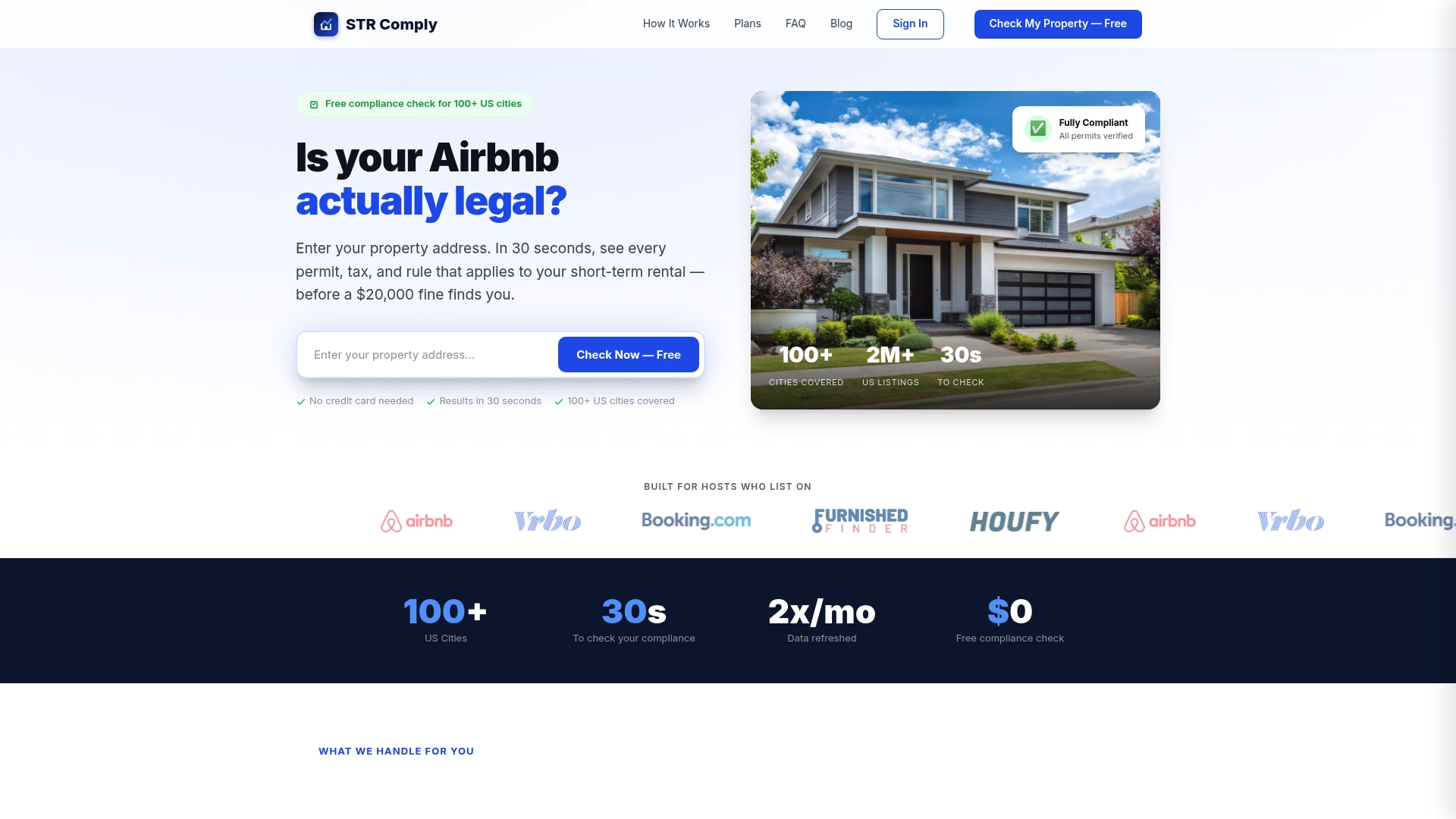
Strcomply gives hosts and property managers a single platform to track all of it. The free compliance check tool lets you instantly verify whether a listing meets local regulations for permits, taxes, and zoning. Paid plans add a portfolio dashboard with renewal alerts, regulatory update notifications, and permit tracking across every market you operate in. For hosts managing properties in cities like New York, Houston, or Los Angeles, where rules change frequently and enforcement is active, Strcomply reduces the time spent on research and the risk of missing a critical deadline. Visit Strcomply to check your listing’s compliance status today.
FAQ
What are city-specific host regulations?
City-specific host regulations are municipal rules governing how short-term rentals operate within a given city, covering permits, taxes, occupancy limits, zoning, and safety requirements. They vary significantly between cities and often impose stricter standards than state law.
Do I need a separate permit for each city I host in?
Yes. Each city issues its own STR permit or license, and a permit from one municipality does not transfer to another. Some cities, like Miami, require multiple permits at both the city and county level.
Can cities see my Airbnb booking history?
Cities with data-sharing agreements, such as those operating under California’s SB 346, receive monthly booking data directly from platforms. This gives local enforcement agencies near real-time visibility into STR activity.
What happens if I use an event permit but skip the insurance requirement?
Event-specific permits do not waive standard compliance obligations. Hosts who skip liability coverage under a temporary permit face the same penalties as standard permit holders, including fines and permit revocation.
How do I prove primary residency for an STR permit?
NYC and similar cities require utility bills, lease or mortgage agreements, and evidence of host physical presence during guest stays. Hosts have a limited window, typically 30 days, to correct documentation deficiencies before a permit application is denied.
Recommended
Check your city's STR regulations
Free compliance reports for 100+ US cities. Permits, taxes, zoning — all in one place.
Check My Address — Free