
Short-term rental regulations are the legal and municipal rules governing how hosts can list and operate properties on platforms like Airbnb and VRBO. Understanding concrete examples of Airbnb regulations is not optional for hosts, property managers, or real estate investors. The consequences of non-compliance range from permit revocation to fines exceeding $10,000 per day. Regulations commonly cover permits, primary residency requirements, guest count limits, rental duration caps, and advertising accuracy. Cities like New York City, Spokane, and Gilpin County, Colorado have each built distinct frameworks that illustrate how local Airbnb restrictions work in practice.
1. Examples of licensing and permit requirements for Airbnb hosts
Licensing is the most universal category of short-term rental regulations across U.S. jurisdictions. Nearly every city or county that has addressed Airbnb activity requires some form of registration or operating permit before a host can legally accept guests.
New York City requires hosts to register for $145 before listing, and that registration is only valid when the host is physically present during the entire guest stay. This is one of the most restrictive Airbnb operating permit frameworks in the country, effectively eliminating unhosted rentals in the five boroughs.

Gilpin County, Colorado uses a tiered license system with three distinct categories based on owner occupancy and residency. Tier 1 requires owner occupancy. Tier 2 is available to county residents. Tier 3 is open to non-residents but subject to a hard cap of 5% of available licenses, which regularly triggers waitlists. Licenses are non-transferable, meaning a property sale does not carry the license to the new owner.
Spokane, Washington charges permit fees from $200 to $300 depending on zoning classification, with separate annual renewal fees. The amended law, effective September 1, 2023, also requires hosts to display their permit number on all advertising, including Airbnb listings.
Townsend, Tennessee charges $250 annually for a short-term rental permit, limits occupancy to 12 persons, requires off-street parking, and mandates a 24/7 local contact who must respond to complaints within 45 minutes. These safety and accountability requirements are increasingly common in tourist-heavy small towns.
- New York City: $145 registration, host presence required, 2-guest maximum
- Gilpin County, CO: Tiered system, 5% cap on non-owner licenses, non-transferable
- Spokane, WA: $200 to $300 permit fee by zone, permit number on all ads
- Townsend, TN: $250 annual permit, 12-person occupancy cap, local contact required
Pro Tip: Check your rental license requirements before signing a lease or closing on a property. Permit caps and waitlists in markets like Gilpin County can make a property commercially unviable before you even list it.
2. Residency and host presence requirements in Airbnb regulations
Host presence rules are among the most misunderstood elements of Airbnb compliance guidelines. Many hosts assume that owning the property is sufficient. Several jurisdictions require much more.
New York City’s Local Law 18, fully enforced since September 2023, requires the registered host to be physically present for the entire duration of every guest stay. Renting out your apartment while traveling is not permitted. This rule effectively bans the investment-property Airbnb model in NYC for stays under 30 days.
Washington State draws a legal distinction between hosted and unhosted stays. A hosted stay means the owner or a designated resident is present on the property during the rental. An unhosted stay means the property is rented without any resident present. Many Washington municipalities apply different rules, fees, or permit tiers based on this distinction.
Gilpin County’s Tier 1 license is only available to owner-occupants, meaning the property must be the host’s primary residence. Investors who purchase a second home in Gilpin County cannot qualify for Tier 1 and must compete for the limited Tier 2 or Tier 3 licenses.
Key residency and presence scenarios to understand:
- Full-time physical presence: Required in NYC for all stays under 30 days
- Primary residency: Required for owner-occupied tiers in Colorado jurisdictions
- Hosted vs. unhosted distinction: Determines permit type and fee in Washington State
- Partial presence: Some jurisdictions allow the host to be absent for part of a stay; others do not
Violating a residency or presence mandate is not a minor infraction. In NYC, it can result in permit revocation and fines. In Gilpin County, it can disqualify a host from license renewal entirely.
3. Limits on rental duration, guest counts, and advertising practices
Duration caps, occupancy limits, and advertising rules form the operational core of most short-term rental regulations. These rules directly affect how you run your listing day to day.
Arlington Heights, Illinois passed an ordinance classifying Airbnb-style rentals as community nuisances, banning all rentals under 30 days starting July 1, 2026, with no grandfathering for existing reservations. This is one of the most aggressive local Airbnb restrictions in the Midwest and signals a growing trend of outright bans rather than regulation.
New York City caps short-term rentals at two paying guests per stay, regardless of property size. A four-bedroom apartment cannot legally host a family of five under Local Law 18. This guest count limit is enforced through the registration system and platform compliance requirements.
Honolulu enforces fines up to $10,000 per day for illegal STR advertising, even when the listing error is unintentional. A 2026 lawsuit involved a host facing $600,000 in cumulative fines for a mistaken listing. Honolulu’s law allows penalties based solely on the act of advertising an illegal rental, not on whether a guest actually stayed.
| Jurisdiction | Duration rule | Guest limit | Advertising requirement |
|---|---|---|---|
| New York City | Under 30 days requires host presence | 2 paying guests | Permit number on listing |
| Arlington Heights, IL | Minimum 30-day stay required | Not specified | N/A (bans STRs under 30 days) |
| Spokane, WA | No minimum, permit required | Per zoning | Permit number on all ads |
| Honolulu, HI | Strict zoning limits | Per permit | Accurate listing mandatory |
| Townsend, TN | No minimum, permit required | 12 persons | Permit display required |
Pro Tip: Advertising compliance is as legally significant as operational compliance. Enforcement agencies in Honolulu and Spokane use listing accuracy as the trigger for fines, not just whether a guest checked in.
4. How Airbnb regulations and enforcement vary by jurisdiction
Regulatory environments for short-term rentals range from outright bans to actively investor-friendly frameworks, often within the same state. Understanding this spectrum is critical for real estate investors evaluating new markets.
New York City represents the strictest end of the spectrum in the U.S. Upstate New York markets like the Catskills and Finger Lakes operate under far more permissive county rules, with many townships welcoming STR activity as a tourism driver. The contrast within a single state illustrates why STR laws are primarily local and cannot be assumed from state-level research alone.
Colorado presents a similar pattern. Gilpin County’s tiered cap system is restrictive, while other Colorado municipalities apply lighter-touch registration requirements. Denver has its own permit system distinct from county rules, requiring hosts to verify which layer of regulation applies to their specific address.
Texas cities like Houston require city certificates for STRs, with platforms instructed to remove listings that lack valid certificates. Enforcement began in April 2026, with the city notifying Airbnb and VRBO directly to delist non-compliant properties. This platform-level enforcement model is increasingly common and means a missing permit can result in automatic delisting, not just a fine.
Key enforcement patterns to recognize:
- Platform delisting: Houston and EU jurisdictions use platform data to remove non-compliant listings
- Advertising-based fines: Honolulu issues penalties based on listing text alone
- Waitlist markets: Gilpin County’s cap means new investors may be locked out entirely
- Outright bans: Arlington Heights eliminates the STR market for stays under 30 days
The EU’s registration mandate effective May 2026 requires all STR hosts to carry unique registration numbers, with platforms transmitting monthly data to authorities. Non-compliance triggers mandatory delisting. This model is influencing U.S. cities that are building similar platform-enforcement partnerships.
5. House rules, liability, and compliance beyond the law
Airbnb house rules are not the same as legal short-term rental regulations, but they serve a distinct and practical compliance function. Confusing the two is a common mistake among new hosts.
Legal regulations are imposed by municipalities and carry fines, permit revocation, or criminal liability. House rules are policies set by the host within the Airbnb platform and govern guest behavior during a stay. Both matter for operating a compliant, low-risk listing.
Common house rules include quiet hours, no-party policies, smoking bans, pet restrictions, and maximum occupancy limits. These rules help hosts maintain good standing with neighbors, reduce noise complaints, and avoid HOA violations. In jurisdictions where neighbor complaints trigger municipal inspections, strong house rules can be a first line of defense.
Liability is a separate but related concern. Hosts who fail to set clear occupancy limits in their house rules may face insurance complications if a guest injury occurs with more people present than the policy covers. Aligning your house rules with your insurance policy’s occupancy terms is a practical step that most hosts overlook.
- Quiet hours: Typically 10 PM to 8 AM; align with local noise ordinances
- No-party policy: Reduces liability and neighbor complaints
- Smoking ban: Protects property and may be required by HOA rules
- Max occupancy: Must match permit limits and insurance policy terms
- Local emergency contact: Required by law in Townsend, TN; best practice everywhere
Pro Tip: Draft your house rules to mirror the language in your local permit. If your Townsend permit caps occupancy at 12 persons, your Airbnb listing should state the same number. Consistency between your permit and your listing reduces enforcement exposure.
Key takeaways
Short-term rental regulations are jurisdiction-specific, and every host must verify permit, residency, duration, and advertising requirements for their exact property address before listing.
| Point | Details |
|---|---|
| Permits are mandatory in most markets | Cities like NYC, Spokane, and Townsend require permits before any listing goes live. |
| Host presence rules vary significantly | NYC requires full physical presence; Washington State distinguishes hosted from unhosted stays. |
| Advertising errors carry legal penalties | Honolulu fines hosts up to $10,000 per day for inaccurate listings, regardless of intent. |
| Enforcement uses platform data | Houston and EU regulators instruct platforms to delist non-compliant listings directly. |
| House rules support legal compliance | Aligning house rules with permit terms reduces liability and neighbor complaints. |
Why I think most hosts underestimate the advertising risk
Most hosts focus their compliance energy on getting the permit. That is the right instinct, but it is only half the job. The Honolulu case involving $600,000 in fines for a mistaken listing is not an outlier. It is a preview of where enforcement is heading.
Regulators have discovered that auditing listing text is far easier than inspecting physical properties. A city attorney can review 500 Airbnb listings in an afternoon. Inspecting 500 properties takes months. This asymmetry means that advertising compliance is becoming the primary enforcement mechanism in markets with aggressive STR oversight.
I have seen hosts with valid permits face fines because their listing description referenced amenities or occupancy numbers that conflicted with their permit terms. The permit was current. The listing was the problem. This is why I recommend treating your Airbnb listing as a legal document, not a marketing brochure.
The second underestimated risk is regulatory change. Arlington Heights banned sub-30-day rentals with no grandfathering for existing reservations. Hosts who had bookings confirmed for August 2026 had no legal protection. Markets can shift from permissive to restrictive within a single council vote. Ongoing monitoring of regulatory updates is not a luxury. It is a core operating requirement.
Build good neighbor relationships. File accurate listings. Monitor your market. These three habits will protect your investment better than any single permit application.
— Jure
Stay compliant with Strcomply
Tracking permit requirements, residency rules, guest limits, and advertising mandates across multiple jurisdictions is a significant operational burden. Strcomply removes that burden with a free, instant compliance check that tells you exactly what your property needs to operate legally on Airbnb or VRBO.
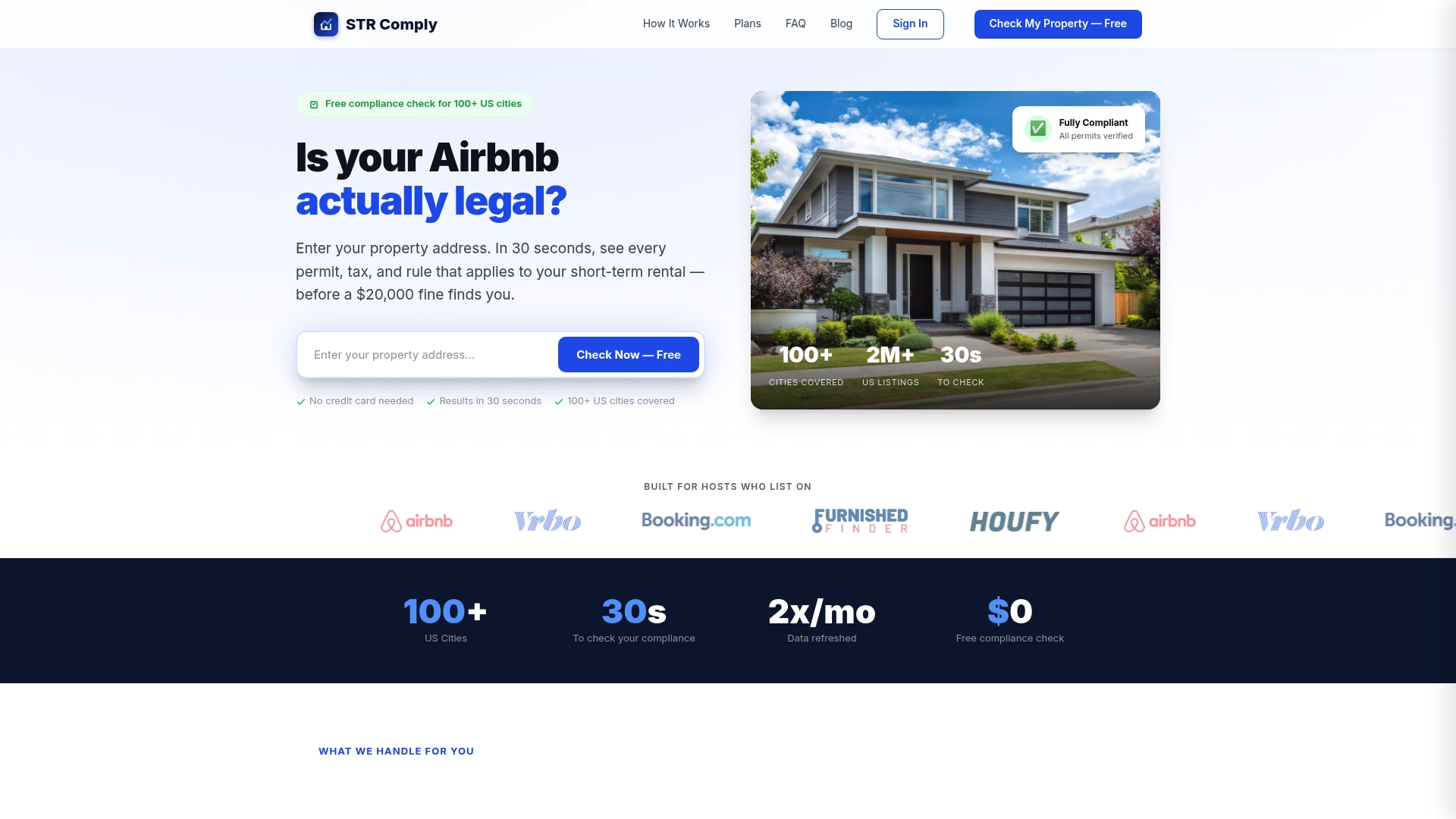
Strcomply’s legality check tool generates city-specific compliance summaries covering permits, tax obligations, zoning restrictions, and operational rules in under 30 seconds. Paid plans add permit tracking, renewal alerts, and real-time regulatory updates across your entire portfolio. If you manage properties in multiple markets, the Strcomply platform gives you a single dashboard to monitor compliance status without manual research. Check your listing today before a missed permit or inaccurate ad becomes a costly problem.
FAQ
What are the most common examples of Airbnb regulations?
The most common short-term rental regulations include permit or registration requirements, primary residency mandates, guest count limits, rental duration caps, and advertising accuracy rules. Cities like New York City, Spokane, and Townsend, Tennessee each illustrate different combinations of these requirements.
Does NYC allow Airbnb rentals?
New York City allows short-term rentals under Local Law 18, but only when the registered host is physically present for the entire stay and no more than two paying guests occupy the property at once. Unhosted rentals under 30 days are effectively banned.
Can a host be fined for a listing error on Airbnb?
Yes. Honolulu enforces fines up to $10,000 per day for advertising an illegal short-term rental, even when the error is unintentional. A 2026 case resulted in $600,000 in cumulative fines for a mistaken listing.
How do I know which Airbnb regulations apply to my property?
Short-term rental regulations are primarily local, meaning they are set at the city or county level rather than the state level. You must verify the specific rules for your property’s exact address, including zoning classification, permit requirements, and any applicable residency mandates.
What happens if my Airbnb listing lacks a valid permit number?
In cities like Spokane and Houston, platforms are instructed to remove listings that do not display a valid permit number. Under the EU’s 2026 registration mandate, non-compliant listings face mandatory delisting across all major short-term rental platforms.
Recommended
Check your city's STR regulations
Free compliance reports for 100+ US cities. Permits, taxes, zoning — all in one place.
Check My Address — Free