
Ongoing compliance for short-term rental hosts is defined as the continuous process of meeting local permit requirements, tax obligations, zoning restrictions, and operational rules on an active, uninterrupted basis. This is not a one-time checklist. In 2026, cities like Austin and New York City have formalized enforcement mechanisms that can suspend or revoke permits for hosts who fall out of compliance after initial registration. New EU regulations and California’s SB 346 now mandate continuous data reporting from booking platforms directly to regulators, enabling near-real-time reconciliation of bookings against registration status. For Airbnb and VRBO hosts managing properties across multiple markets, understanding how to maintain ongoing compliance is the difference between a profitable operation and a costly shutdown.
How to maintain ongoing compliance: essential requirements in 2026
Short-term rental compliance in 2026 covers more ground than most hosts anticipate. The regulatory baseline has expanded significantly, and meeting it requires attention across several distinct obligation categories.
Registration and licensing form the foundation. Most U.S. cities now require a valid, city-issued STR permit before a listing can go live. Licensing processes can take 6 to 10 weeks, which means hosts who let permits lapse face a real operational gap. Austin, for example, enforces fines of up to $2,000 per day for repeated offenses after enforcement deadlines. That figure is not a worst-case scenario. It is the documented penalty structure for hosts who ignore renewal notices.

Platform display requirements have also tightened. Airbnb and VRBO now require hosts to display valid license numbers directly on listings. Failure to post a current permit number can trigger automatic delisting, independent of any city enforcement action. This means a host can be technically registered but still lose their listing due to an administrative oversight.
Beyond registration, hosts must actively manage:
- Occupancy and guest limits: Many cities cap the number of guests per night based on bedroom count or square footage. Exceeding these limits, even once, can trigger a formal complaint.
- Noise and nuisance restrictions: Ordinances in cities like Nashville and Denver include decibel limits and quiet hours that apply to STR properties specifically.
- Insurance and liability coverage: Several jurisdictions now require proof of commercial liability coverage as a condition of permit renewal, not just initial issuance.
- Safety equipment mandates: Smoke detectors, carbon monoxide detectors, and posted emergency exit plans are required in most regulated markets and are subject to inspection.
- Renewal deadlines: Permit renewals are not automatic. Renewal criteria can change between cycles, and cities are increasingly adding new conditions at renewal time.
Pro Tip: Set calendar reminders 90, 60, and 30 days before every permit renewal deadline. Many hosts lose permits not because they violated rules, but because they missed a renewal window.
The consequences of non-compliance extend beyond fines. Cities with advanced enforcement infrastructure, including NYC’s OATH adjudication process and Austin’s platform delisting protocols, can interrupt operations immediately and require legal contestation to restore a listing. That process is expensive and time-consuming.
How do you set up continuous compliance monitoring?
Continuous compliance monitoring is the practice of tracking your regulatory status, permit deadlines, and rule changes on an ongoing basis rather than reacting to enforcement notices. It is the core of any working compliance management strategy.
Here is a practical framework for setting it up:
-
Build a centralized compliance tracker. A shared spreadsheet or dedicated software tool should log every property’s permit number, issue date, renewal deadline, tax registration status, and applicable local rules. A centralized compliance tracker creates a defensible audit trail and significantly reduces the risk of missing critical updates.
-
Subscribe to regulatory alert feeds. Sign up for email alerts from your city’s planning or licensing department. Many municipalities publish regulatory changes through official newsletters or public notice boards. For multi-market operators, tools that aggregate these feeds save significant time.
-
Assign clear ownership. Every property in your portfolio needs a designated compliance owner. For solo hosts, that is you. For property management companies, assign a specific team member responsible for each market. Without ownership, tasks fall through the gaps.
-
Establish a monthly review cycle. Once per month, review every active permit, tax filing status, and any open notices or complaints. This review should take no more than 30 minutes per property if your tracker is current.
-
Integrate platform data. Airbnb and VRBO provide booking data that can be cross-referenced against your permitted occupancy limits. Real-time compliance monitoring includes tracking license status, enforcement actions, and corporate standing changes throughout the property management lifecycle.
Pro Tip: Use your compliance tracker as a living document. Add a “last reviewed” column and update it after every monthly check. This single habit creates the audit trail that protects you if a city inspector ever questions your compliance history.
The table below summarizes the core components of a continuous monitoring system:
| Monitoring component | Frequency | Purpose |
|---|---|---|
| Permit and license status check | Monthly | Confirm no suspensions or lapses |
| Tax filing and remittance review | Per filing period | Avoid transient occupancy tax penalties |
| Regulatory alert subscriptions | Ongoing | Catch rule changes before they take effect |
| Occupancy and booking cross-check | Weekly | Verify adherence to guest limits |
| Insurance and safety equipment audit | Quarterly | Meet renewal conditions proactively |
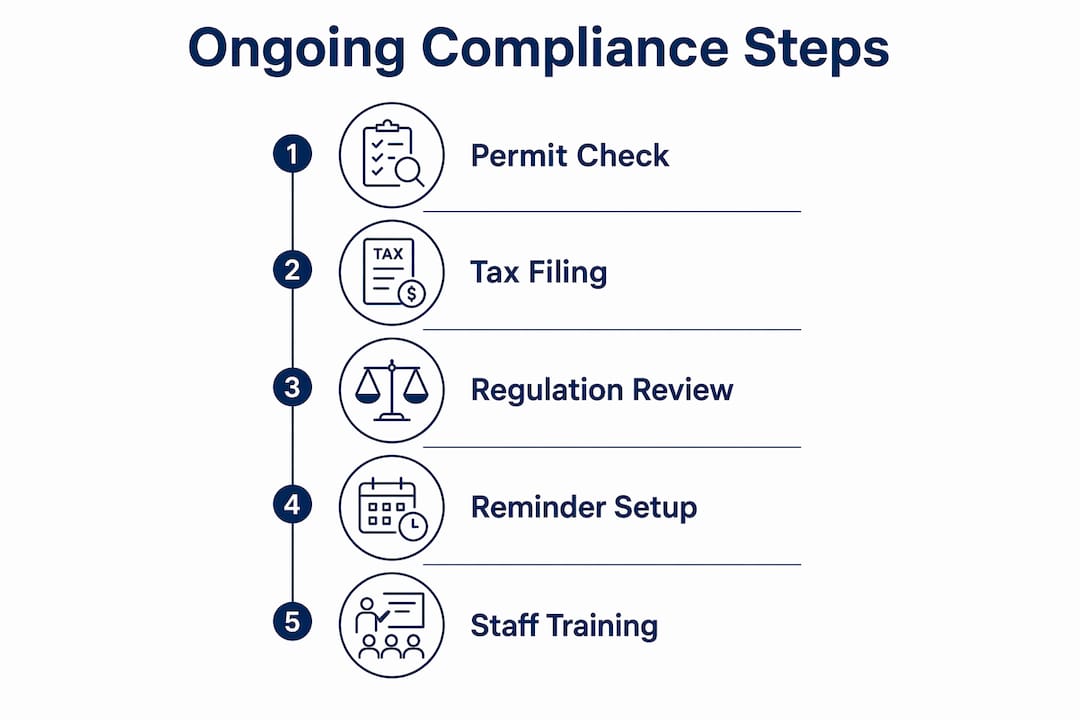
What processes help manage regulatory changes and stay current?
Regulations change. Cities revise occupancy caps, add new permit conditions, and update tax rates with little advance notice. The hosts who avoid penalties are the ones who catch these changes before they become violations.
The most reliable approach combines three practices:
- Tiered alert subscriptions: Subscribe to official city planning department newsletters, state legislative tracking services, and STR-specific news sources. Prioritize alerts by risk severity. A change to permit renewal criteria in your primary market ranks higher than a proposed ordinance in a city where you have one listing.
- Impact assessments: When a regulatory change is announced, document how it affects each property in your portfolio. Note the effective date, the specific rule change, and the action required. This documentation serves as both a planning tool and a compliance record.
- Internal communication protocols: If you manage a team or work with property managers, establish a clear process for communicating regulatory changes. A shared Slack channel, a weekly compliance briefing, or a formal change log all work. The key is that no one on your team should learn about a rule change from an enforcement notice.
Understanding 2026 platform regulation changes is particularly important because platforms like Airbnb now act as data conduits between hosts and regulators. Under California’s SB 346 and the EU’s new data-sharing mandates, booking data flows directly to tax authorities and licensing offices. This means regulators can identify discrepancies between your reported activity and your permit conditions without conducting a physical inspection.
Pro Tip: When a new regulation is announced, give yourself a 30-day implementation window even if the effective date is 90 days out. Bureaucratic processes, insurance updates, and safety equipment installations take longer than expected.
Regular training matters too. If you work with co-hosts, cleaners, or property managers, make sure they understand the operational rules that apply to each property. Noise complaints, unauthorized guests, and safety violations often originate from on-the-ground staff who were never briefed on local restrictions.
What are common compliance challenges and how do you fix them?
Compliance drift is the most underreported risk in STR management. It describes the gradual erosion of compliance status that occurs when hosts stop actively monitoring their obligations. In NYC, compliance drift increased from 20% to 27% of hosts reverting to prohibited conduct between 2025 and 2026. That trend confirms that even registered hosts lose compliance over time without structured review.
Common signs of compliance drift include:
- Permits renewed without reviewing updated conditions
- Tax remittances that no longer match current rates
- Listings that display outdated license numbers
- Bookings that exceed permitted occupancy limits
- Insurance policies that lapsed at renewal without replacement
One of the most dangerous assumptions in STR management is that platforms enforce compliance continuously. They do not. Airbnb and VRBO verify registration at listing intake. After that, ongoing adherence is entirely the host’s responsibility. Off-platform bookings, direct reservations, and operational rule violations fall completely outside platform visibility.
The table below compares reactive versus proactive compliance approaches:
| Approach | Trigger | Risk level |
|---|---|---|
| Reactive compliance | Enforcement notice or fine received | High. Penalties already apply. |
| Periodic review | Scheduled monthly or quarterly check | Medium. Gaps possible between reviews. |
| Continuous monitoring | Automated alerts and real-time tracking | Low. Issues caught before enforcement. |
When you receive a compliance notice or enforcement action, respond within the stated deadline. Cities with formal adjudication processes, like NYC’s OATH system, have strict timelines. Missing a response window can convert a correctable violation into a permit revocation. Building a working relationship with your local licensing office also pays dividends. Compliance officers often provide informal guidance on upcoming rule changes before they are formally published. That early warning is worth more than any alert subscription.
For a structured starting point, the host compliance checklist from Strcomply covers the key obligations across permit, tax, and operational categories.
Key takeaways
Maintaining ongoing STR compliance requires continuous monitoring, documented processes, and proactive responses to regulatory changes. Reactive management consistently leads to fines, permit revocations, and platform delistings.
| Point | Details |
|---|---|
| Compliance is continuous | Permits, taxes, and operational rules must be monitored actively, not just at initial registration. |
| Platforms do not monitor for you | Airbnb and VRBO verify compliance at intake only. Ongoing adherence is the host’s responsibility. |
| Compliance drift is measurable | NYC data shows 27% of registered hosts reverted to violations by 2026 without structured review. |
| Centralized tracking reduces risk | A shared compliance tracker with a documented audit trail is the most practical defense against penalties. |
| Regulatory changes require triage | Prioritize rule changes by risk severity and set implementation windows before effective dates arrive. |
Why compliance is a business asset, not just a requirement
I have worked with hosts across multiple U.S. markets, and the pattern is consistent. The operators who treat compliance as a background task are the ones who call in a panic after receiving a suspension notice. The ones who build it into their weekly workflow rarely face enforcement actions at all.
What most guides miss is that compliance documentation is also a business asset. When you go to refinance a property, bring on an investor, or sell a portfolio, a clean, auditable compliance record is evidence of professional management. Cities are increasing enforcement capacity with formal suspension and revocation mechanisms, and that trend is not reversing. The hosts who adapt now will operate with far less friction in the years ahead.
My honest advice: stop treating your compliance tracker as a spreadsheet you update when something goes wrong. Treat it as a living record of your business’s regulatory health. Review it monthly, assign ownership, and subscribe to at least one regulatory alert feed for every market where you operate. The time investment is small. The downside of skipping it is not.
— Jure
How Strcomply simplifies your compliance management
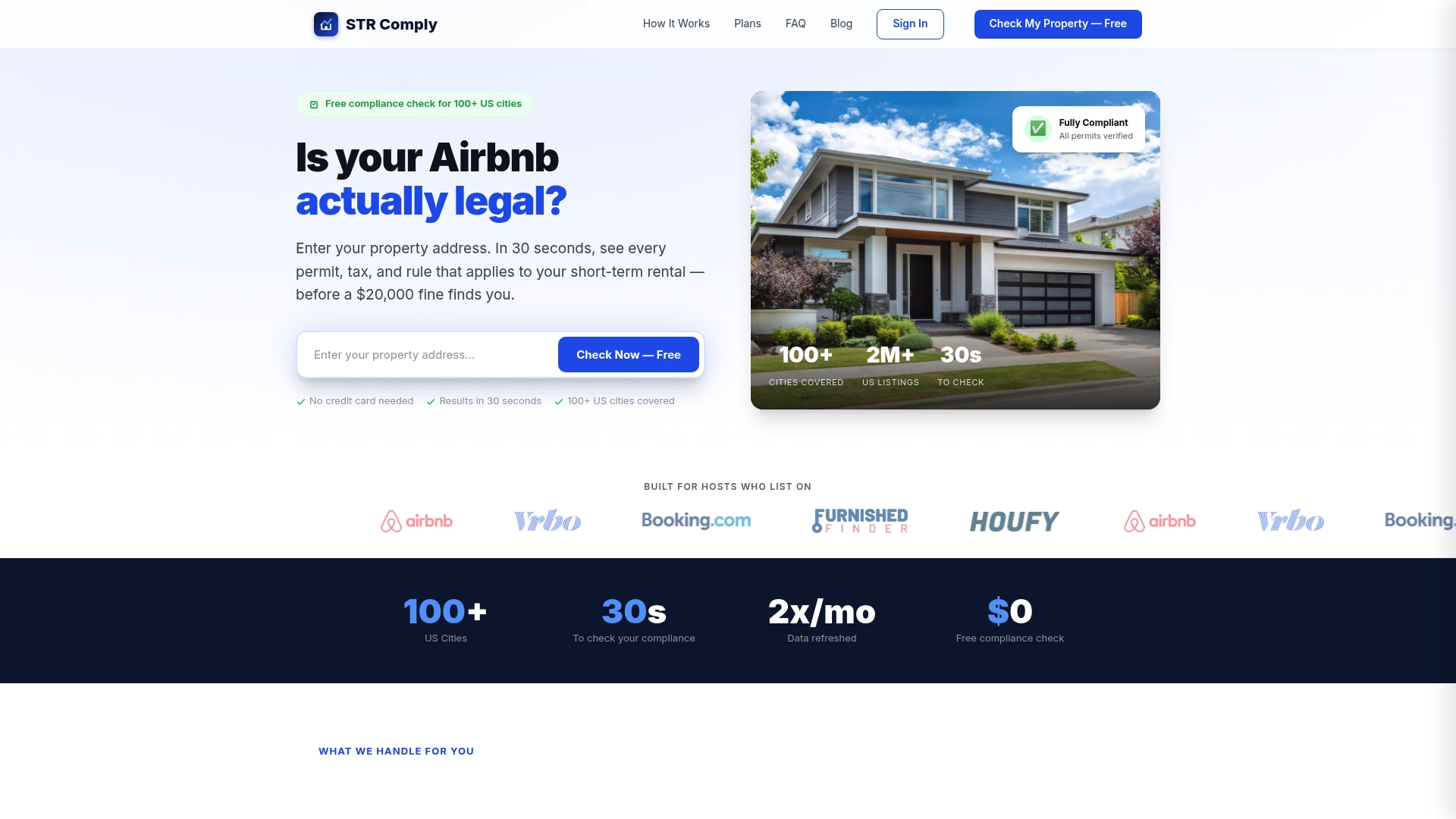
Strcomply is built specifically for STR hosts and property managers who need to stay on top of permit requirements, tax obligations, and zoning rules across multiple markets. The platform provides city-specific compliance summaries, permit tracking dashboards, and renewal alerts that notify you before deadlines arrive, not after. For hosts managing portfolios across jurisdictions with different rules and enforcement timelines, centralized compliance tracking tools eliminate the manual work of monitoring each market separately. Strcomply’s regulatory update feeds keep your compliance records current as local laws change, so you are not caught off guard by new permit conditions or revised tax rates. Start with a free compliance check for your listing and see exactly where you stand today.
FAQ
What is ongoing compliance for short-term rentals?
Ongoing compliance is the continuous process of meeting all applicable local regulations, permit conditions, tax obligations, and operational rules for an STR property. It requires active monitoring and regular updates, not just initial registration.
Why can’t I rely on Airbnb or VRBO to manage my compliance?
Airbnb and VRBO verify registration at listing intake but do not monitor ongoing adherence to local rules. Off-platform bookings, occupancy violations, and permit lapses fall entirely outside platform enforcement.
How often should I review my STR compliance status?
A monthly review of permit status, tax filings, and operational rules is the minimum recommended frequency. Properties in high-enforcement markets like NYC or Austin benefit from weekly occupancy cross-checks as well.
What happens if I miss a permit renewal deadline?
Missing a renewal deadline can result in fines, listing suspension, or permit revocation depending on the jurisdiction. In Austin, fines reach $2,000 per day for repeated offenses, and reinstatement requires restarting the full licensing process.
What is the fastest way to check my current compliance status?
Strcomply’s free compliance check tool provides an instant, city-specific summary of your permit requirements, tax obligations, and operational restrictions based on your listing location.
Recommended
Check your city's STR regulations
Free compliance reports for 100+ US cities. Permits, taxes, zoning — all in one place.
Check My Address — Free