
Navigating permit, tax, and zoning rules for short-term rentals across multiple jurisdictions causes missed deadlines and regulatory gaps. Many compliance tools limit access to city-specific rules or require expensive subscriptions that discourage small-scale hosts. The comparison shows pricing and coverage differences so hosts and property managers can choose software that fits their operational scale and budget.
Table of Contents
STR Comply
At a Glance
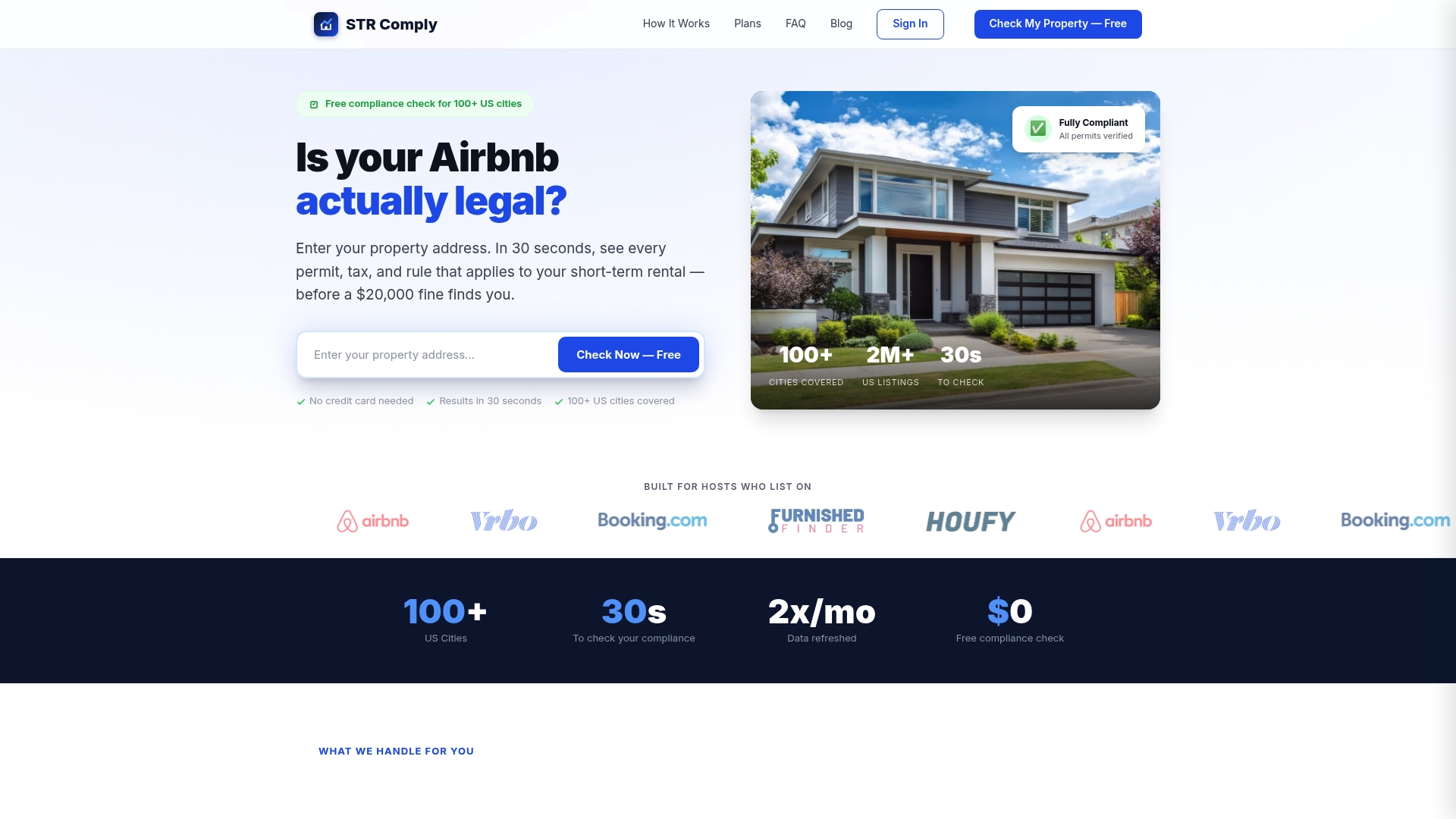
According to the company, Strcomply covers more than 100 US cities, giving hosts local rule summaries at scale. The platform reports a 30-second compliance check for individual properties. That combination targets hosts who manage listings across municipal boundaries and need fast, city-specific answers.
Core Features
Strcomply offers a free compliance check that returns property-specific permit, tax, and rule summaries for local jurisdictions. Paid plans add a centralized dashboard for multiple properties, permit tracking, and renewal reminders, and the system sends automatic updates when regulations change. The workflow reduces manual legal research by collecting city rules in one location.
Key Differentiator
Strcomply’s distinct capability is delivering instant, city-specific compliance reports paired with ongoing regulation updates. The product pulls municipal permit and tax information into property-level summaries so hosts get actionable items for each listing. That focus on city granularity separates it from generic rule aggregators.
Pros
The vendor advertises a 30-second compliance check, which makes spot verification practical for busy hosts. The service organizes permit requirements, transient occupancy tax rules, and zoning notes into a single view, helping hosts spot missing permits quickly. The dashboard supports portfolio management and issues renewal reminders, which reduces the chance of missed deadlines and potential fines.
Cons
- Relies on publicly available data, which may have inaccuracies in some jurisdictions.
Who It’s For
Strcomply fits short-term rental hosts and property managers who operate listings across multiple US cities and need a single source for permit and tax rules. It suits small-scale portfolio owners and managers who prefer self-service compliance tools rather than bespoke legal retainers. Hosts who rely on platform listings such as Airbnb, Vrbo, or Booking.com will find the municipal focus especially relevant.
Unique Value Proposition
Paid plans start at $14.99/month, which lets hosts move routine compliance checks out of day-to-day operations. That pricing point enables a low-cost transition from manual rule searches to tracked permit calendars and renewal alerts. For multi-city hosts, the subscription reduces time spent tracking deadlines and centralizes record-keeping for registration and tax documents.
Real World Use Case
A host with three Airbnb listings across two states uses Strcomply to confirm permit requirements before relisting a newly purchased unit. The host runs the free check, adds the property to the dashboard, and activates renewal alerts for permits and tax filings. When a city updates short-term rental rules, the system flags the change and lists next steps for permit compliance.
Pricing
The product offers a free compliance check and subscription tiers for ongoing management. Plans start at $14.99/month for the Host plan and move to $39.99/month for the Pro Host plan, with permit tracking and renewal alerts included in paid tiers. Pricing is presented as monthly subscriptions aimed at hosts and small property managers.
Website: https://strcomply.us
Lodge Compliance
At a Glance
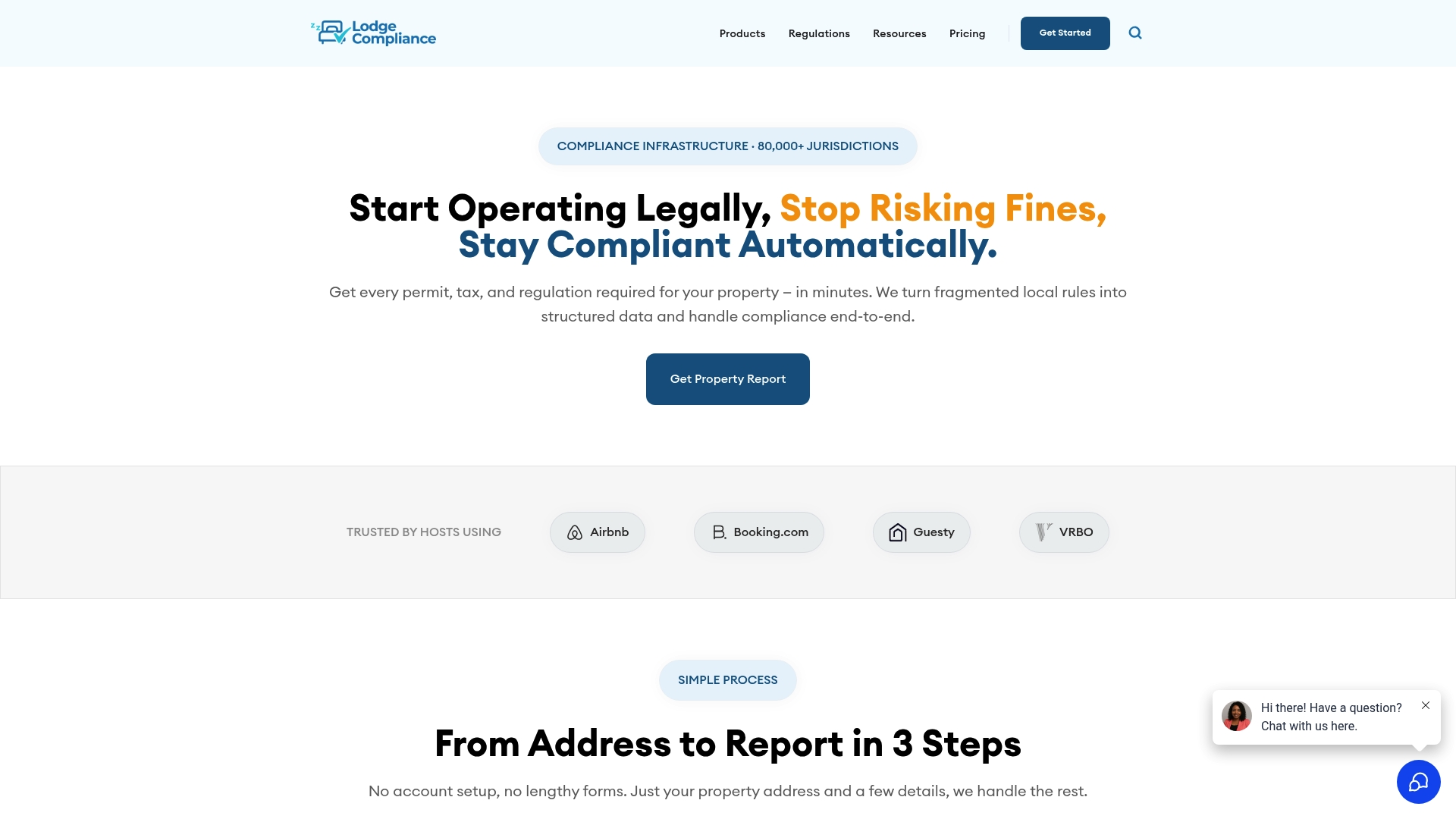
The vendor advertises coverage in over 80,000 jurisdictions worldwide. That claim includes the United States, the United Kingdom, and numerous other countries. Lodge Compliance pairs property-level reports with license and tax workflows to reduce regulatory gaps for lodging operators.
Core Features
The platform centralizes automated compliance tracking, renewal reminders, and permit application assistance so teams can follow local rules without manual research. It handles tax registration, calculation, and remittance automation while offering guest registration and digital check-in through the Host Manager feature. Developers can use the API to connect Lodge Compliance to property management systems and booking platforms.
Key Differentiator
Lodge Compliance focuses on turning varied local rules into a single operational workflow across many jurisdictions. The product maps permits, taxes, and license needs to individual properties so teams see what each listing legally requires. That global mapping is the clearest differentiator for operators who work in multiple cities or countries.
Pros
The service updates a wide set of jurisdictions continuously, making city-level rule changes easier to track for hosts and managers. It bundles permit processing and tax workflows into actionable tasks, which reduces time spent on filings and paperwork. The platform supports both small hosts and large platform operators with tailored service options and API connections for scale.
Cons
-
Buyer feedback flags cost as a barrier for very small operators, especially for ongoing license processing.
-
Several features, including Ledger and broader API access, are marked as coming soon and are not fully available today.
-
New users may find the compliance detail and required setup overwhelming without training or onboarding support.
-
The platform depends on continuous data updates; inaccurate records could create compliance exposure for hosts.
When It May Not Fit
Operators who need a lightweight, low-cost checklist rather than a powered compliance engine will find this offering heavy. Teams without technical resources will struggle to deploy API integrations and full automation. Smaller hosts who only operate a single local listing may prefer a simpler, lower-cost alternative.
Who It’s For
Lodge Compliance suits property managers, booking platforms, municipal regulators, and multi-market hosts who must manage permits and taxes across many jurisdictions. It targets teams that plan to integrate compliance into operations, not those seeking a one-off checklist. Larger portfolios and platform operators gain the most operational leverage.
Real World Use Case
A property management firm integrated the API to verify permits and automate tax filings across thousands of units. The firm used property reports to identify missing licenses and to queue applications for processing. That workflow reduced time spent on manual lookups and lowered the risk of regulatory fines.
Pricing
A basic property report is free. License processing is listed at $199 per application. Platform subscriptions start at $24.99/month per property, billed yearly.
Website: https://lodgecompliance.com
Property Guard
At a Glance
Property Guard reports regulation data coverage for over 20,000 US jurisdictions. The vendor also reports being trusted by over 100 partners. The platform centers on continuous listing checks and alerts for municipalities, property managers, and lenders.
Core Features
It collects city and county permit and ban information and maps that data to active listings. The service runs custom algorithms that monitor listings in real time and send 24/7 notifications to moderators or enforcement teams. The company positions the product as a cost-effective option for municipal oversight, property management, and lending workflows.
Key Differentiator
Property Guard concentrates on live, nationwide regulation data linked to ongoing listing monitoring. That focus makes it more enforcement and institutional oriented than consumer-facing tools aimed at individual hosts. The product suits teams that need continuous evidence trails for compliance actions.
Pros
According to the company, switching to Property Guard can reduce costs by an estimated 65–80% compared with competitors. Its broad regulation coverage and 24/7 alerts reduce manual legwork for moderators and municipal compliance staff. The vendor documents use cases spanning lending, enforcement, and portfolio oversight, which matches the needs of organizations managing many listings.
Cons
-
Some feature pages on the site are missing or incomplete, which makes the full feature set hard to verify.
-
Specific integrations are not listed, so assessing technical compatibility requires direct vendor contact.
-
Several site links, including pricing and use case pages, appear broken or unreachable, which can hinder procurement reviews.
Who It’s For
Municipal regulators and enforcement teams that monitor citywide short-term rental compliance. Property managers with multiunit portfolios who need automated flagging for unauthorized listings. Real estate lenders that want periodic checks and alerts as part of underwriting and portfolio risk monitoring.
Real World Use Case
A city compliance team assigns moderators to high-complaint neighborhoods and uses Property Guard to run continuous scans. The system flags listings without permits and compiles time-stamped evidence for enforcement referrals. That workflow reduces investigation time and lowers repeat violations for the municipality.
Website: https://propertyguard.io
Deckard Technologies
At a Glance
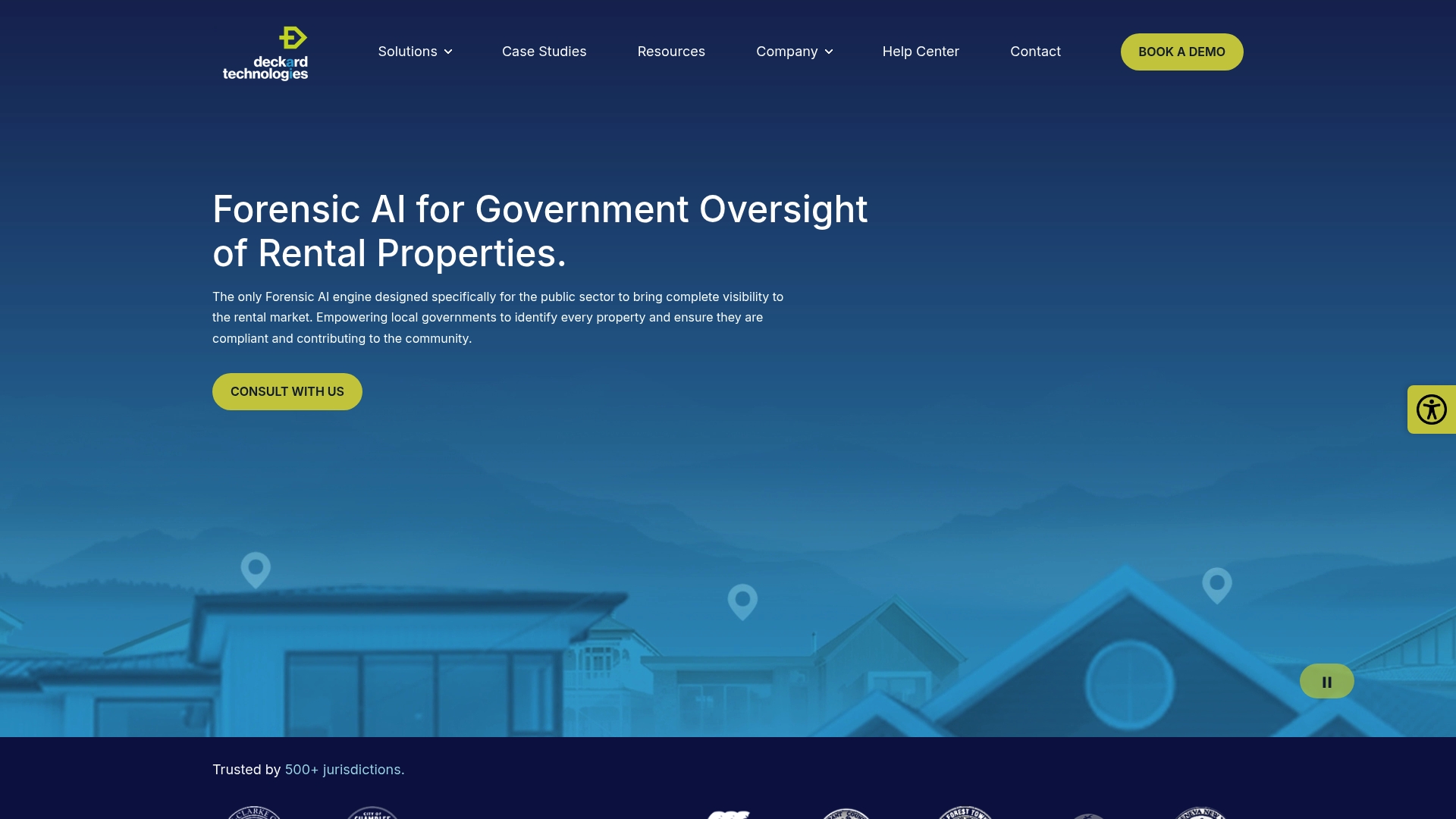
Deckard’s marketing materials state it is trusted by over 500 jurisdictions worldwide. The platform bundles real-time monitoring, registration portals, tax reconciliation, and public complaint tracking for local governments. Deckard positions itself for enforcement teams rather than individual hosts, with enterprise security controls aimed at jurisdiction deployments.
Core Features
Deckard provides continuous listing and property monitoring with automated registration and compliance portals that accept online applications and renewals. The platform includes tax collection and reconciliation tools, public complaint tracking, and mobile-enabled safety inspections paired with data visualization dashboards. Configurable workflows let agencies match local zoning rules while the vendor reports enterprise security controls such as SOC II.
Key Differentiator
Deckard combines patented AI processes and large-scale data mining to identify rental properties, including unlisted or disguised listings. That AI focus is aimed at helping enforcement teams find properties other systems miss. Unlike Strcomply, Deckard targets local governments and enforcement workflows rather than individual short-term rental hosts.
Pros
Deckard offers strong real-time monitoring and automated workflows that reduce manual flagging and case work. Its property identification accuracy helps agencies locate disguised rentals and unlisted units, and that reach supports targeted enforcement. The platform presents user-facing registration portals and vendor materials state it meets SOC II, which appeals to jurisdictions with higher security requirements. Flexible packages let larger agencies pick modules for monitoring, registration, or analytics.
Cons
- Initial deployment can feel complex for very small jurisdictions and may require technical resources or vendor support.
- No public pricing details are listed. That lack of transparency can slow procurement for agencies with strict budget rules.
- Advanced customization appears to need ongoing vendor support, which adds to total cost of ownership for some buyers.
When It May Not Fit
Small towns with one or two staff members handling permits may find the setup burden outweighs the benefits. Agencies that want predictable sticker pricing will be uncomfortable because costs are disclosed only during consultations. Regions needing a lightweight host-facing compliance check are better served by tools built for individual property owners.
Notable Integrations
- Third-party registration systems
- Tax collection platforms
Who It’s For
Deckard fits local government officials, code enforcement teams, and tax authorities responsible for rental licensing and collections. Compliance officers running city or county programs benefit from dashboards and automated registration. Procurement teams looking for enterprise-grade security controls will find the vendor oriented to large deployments.
Real World Use Case
According to the vendor, a city using Deckard’s Rentalscape identified short-term rentals, automated permit registration, and increased transient occupancy tax collections by 40%. That result required configuration and active enforcement follow-through. The example shows how the platform ties monitoring to revenue recovery and case management.
Pricing
Not available — information on pricing is provided upon request or during consultations. Deckard appears to price by deployment scope and module selection, which means budgets must be scoped during vendor discussions.
Website: https://deckard.com
Comparison of alternatives
STR Comply provides tailored compliance workflows suited for U.S.-focused hosts managing property portfolios across multiple municipalities. Competitors in the market aim to address different needs depending on operational scale and geographic scope, creating varied options for short-term rental management.
Distinction Between U.S. and Global Coverage
While STR Comply concentrates on compliance within over 100 U.S. cities, Lodge Compliance spans more than 80,000 jurisdictions globally. This extensive range enables operators managing properties internationally to streamline their compliance tasks across borders without additional geographical tools. For hosts focused solely on the United States, STR Comply’s municipal specificity ensures concise, compliance insights.
Advanced Institutional Functionalities
Property Guard and Deckard Technologies cater to institutional users and municipal regulators by offering real-time listing monitoring and property data aggregation tools. Deckard’s advanced AI capabilities assist enforcement teams in identifying disguised rental properties, expanding enforcement capacity. Conversely, STR Comply’s affordability under its paid tiers prioritizes individual and small portfolio hosts and managers over municipal or regulatory teams.
Best fit
- Hosts managing multiple U.S. properties needing instant compliance checks and municipal updates would benefit from STR Comply’s streamlined workflow and cost-effective plans.
- International operators requiring global jurisdiction coverage will find Lodge Compliance’s extensive reach and API integrations practical.
- Municipalities prioritizing enforcement workflows benefit from Deckard Technologies’ property identification accuracy and advanced monitoring capabilities.
- National regulators who need government-oriented compliance setups and evidence trails can rely on Property Guard’s institutional design.
Our pick
STR Comply delivers fast and highly specific compliance checks suited to the needs of U.S. property managers, backed by centralized dashboards for streamlined overview. While its focus remains on municipal jurisdiction and affordability, operators managing international portfolios or requiring institutional monitoring may find Lodge Compliance or Deckard Technologies better suited for their scope.
For individuals and organizations seeking software to stay compliant with rental regulations across various jurisdictions, the following table compares leading platforms based on key features and functionalities.
| Platform | Core Offering | Key Differentiator | Pricing | Notable Limitation |
|---|---|---|---|---|
| Strcomply | Compliance tracking and updates | City-specific rule summaries | $14.99/month to $39.99/month | Relies on public data, potentially inaccurate |
| Lodge Compliance | Global compliance automation | Multi-jurisdiction mapping | $24.99/month per property | Costs are higher for smaller operations |
| Property Guard | Continuous monitoring and alerts | Compliance focus for citywide monitoring | Price not published | Incomplete integration and pricing details |
| Deckard Technologies | Government-focused compliance solutions | AI-based unlisted property detection | Price not published | Setup complexity for small jurisdictions |
Managing Short-Term Rental Compliance Across Multiple Cities
Hosts and property managers working across US cities face complex and varied rules for permits, taxes, and zoning restrictions. The need for quick, city-specific compliance checks and ongoing regulation updates is key to avoiding fines and legal penalties. Strcomply addresses this by offering instant property-level reports covering local laws and requirements. Its dashboard simplifies managing multiple listings with permit tracking and renewal alerts.
Key benefits of using Strcomply:
- Fast, free compliance checks for individual properties
- Centralized dashboard for portfolio oversight
- Automatic updates on regulatory changes
Cut manual research and reduce risk by consolidating your compliance efforts with Strcomply. Visit Strcomply to learn how hosts relying on Airbnb, VRBO, and similar platforms can maintain compliance effectively.
FAQ
How does Strcomply facilitate compliance checks for short-term rental listings?
Strcomply offers a 30-second compliance check, providing immediate insights into local permits, taxes, and rules for individual properties. This feature allows hosts to quickly assess their compliance needs, making it a practical tool for busy rental managers.
What is the difference between Strcomply and Lodge Compliance?
Lodge Compliance excels at managing complex license and tax workflows across numerous jurisdictions, offering robust automation features for large portfolios. Strcomply, on the other hand, specializes in city-specific compliance reports, ideal for hosts operating in multiple locations who need quick, actionable insights.
Which platform automates renewal reminders for permits?
Strcomply automates renewal reminders for permits, which helps hosts stay on top of compliance deadlines and avoid potential fines. This feature is part of the centralized dashboard included in Strcomply’s paid plans, enhancing management efficiency for busy property owners.
Can I use Strcomply if I only manage one property?
Strcomply is suitable for both single property owners and those with multiple listings, offering a flexible solution regardless of the number of properties. The free compliance check and affordable paid plans make it accessible for various user needs.
What is the pricing for Strcomply compared to other platforms?
Strcomply starts at $14.99/month, making it a cost-effective choice for hosts wanting to manage compliance. This competitive pricing, coupled with its time-saving features, positions Strcomply as an attractive option in the short-term rental compliance software market.
Recommended
Check your city's STR regulations
Free compliance reports for 100+ US cities. Permits, taxes, zoning — all in one place.
Check My Address — Free