
If you list a property on Airbnb or VRBO, you are already operating inside a system governed by rental platform regulation, whether you realize it or not. What is rental platform regulation? At its core, it refers to the legal framework that defines what short-term rental platforms must do, what you as a host must provide, and how authorities enforce compliance across listings. These rules cover registration numbers, tax collection, data reporting, and listing removal. Getting this wrong does not just mean a warning. It can mean your listing disappears overnight.
Table of Contents
- Key takeaways
- What rental platform regulation covers
- How regulations differ by region
- Platform compliance mechanisms and enforcement
- What hosts need to do to stay compliant
- My take on what really drives compliance failures
- How Strcomply helps you stay ahead of the rules
- FAQ
Key takeaways
| Point | Details |
|---|---|
| Regulation covers platforms and hosts | Rental platform guidelines require both platforms and hosts to meet specific legal obligations. |
| Registration accuracy is critical | A single mismatch in your registration number can trigger an automatic listing removal. |
| Rules vary significantly by region | EU, British Columbia, and Austin each apply different compliance requirements and enforcement methods. |
| Platforms enforce rules technically | Automated validation and takedown procedures operate daily in some jurisdictions. |
| Proactive compliance reduces risk | Keeping registration data current and coordinating tax filings protects your listing and revenue. |
What rental platform regulation covers
Rental platform regulation is the body of rules that governs how short-term rental platforms operate as intermediaries between hosts and guests, and between hosts and local authorities. These rules define what data platforms must collect, how they must verify it, what they must share with governments, and when they must remove a listing.
The core obligations platforms now face include the following:
- Registration number collection. Platforms must collect a valid short-term rental registration number from every host before a listing goes live.
- Display requirements. That registration number must be publicly visible on the listing page so authorities and guests can verify it.
- Verification duties. Platforms must verify registration numbers and suspend or remove any listing where the number is invalid, missing, or fraudulent.
- Data sharing mandates. Platforms are required to share rental activity data with relevant authorities on a regular schedule.
- Listing removal on request. Local governments can direct platforms to remove listings that do not comply with local licensing rules.
The EU has moved to formalize these obligations at scale. EU Regulation 2024/1028 standardizes data collection and sharing for short-term rental platforms starting May 20, 2026, requiring platforms like Airbnb and Booking.com to operate under the same validation and reporting obligations across all member states. This is a meaningful shift. Previously, each country interpreted compliance differently, creating uneven enforcement.
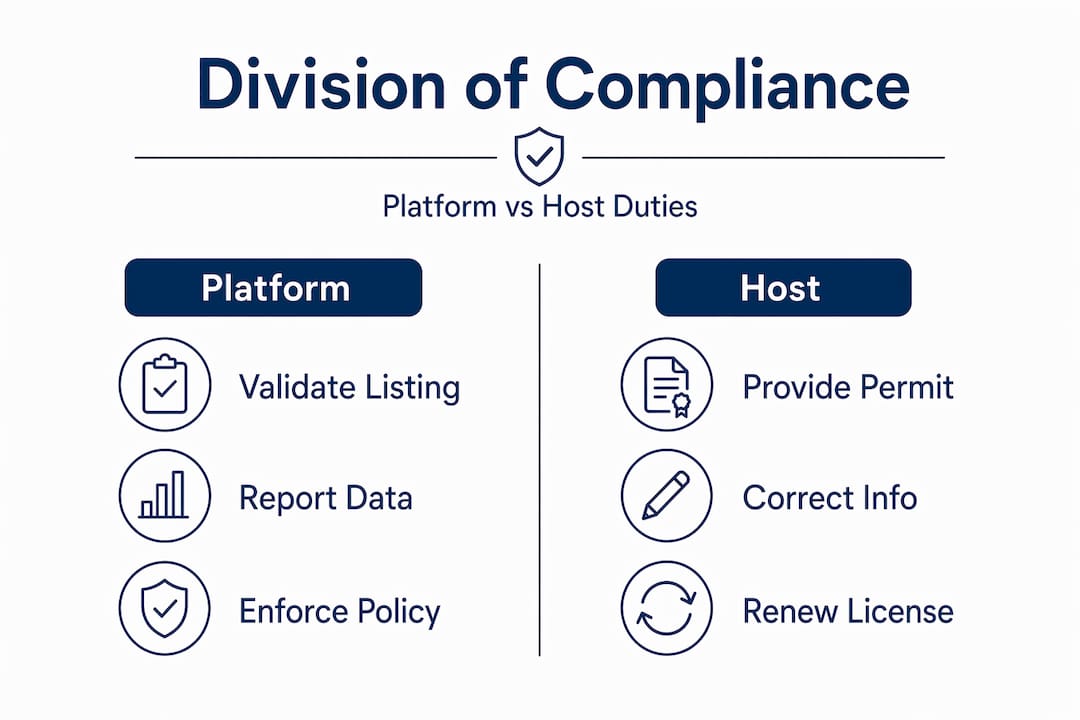
Understanding what governs rental platforms also means recognizing the division of responsibility. The platform is not the rule-maker. EU regulation focuses on standardized enforcement data while leaving local licensing rules and caps under municipal authority. The platform becomes a conduit for enforcement rather than the source of the rules themselves.
Pro Tip: Check the exact format your local authority requires for the registration number. Many listing removals happen because the number is entered correctly in the government system but formatted slightly differently on the platform.
How regulations differ by region
One of the most challenging aspects of rental regulations explained in practice is that the rules are not uniform. The same host operating in Paris, Vancouver, and Austin faces three different regulatory systems with different timelines, enforcement tools, and tax requirements.
| Jurisdiction | Key platform obligations | Tax requirements | Listing enforcement |
|---|---|---|---|
| EU (from May 2026) | Collect, display, and verify registration numbers; share data with authorities | Determined by local member state rules | Remove or disable invalid listings |
| British Columbia, Canada | Register with provincial registry; validate registration numbers; share monthly data | No platform-level tax remittance mandate | Daily API validation; remove on local government request |
| Austin, Texas, USA | Register with city; remove unlicensed listings on request | Collect and remit Hotel Occupancy Tax on behalf of hosts | Listing removal required from July 2026 |
British Columbia provides one of the most technically detailed models of how to regulate rental platforms. Platforms must register with the provincial registry, validate listing registration numbers daily for medium and major platforms, and remove non-compliant listings when requested by local governments. Hosts in BC can see their listing status change within a single day if their registration number fails validation.

Austin takes a different but equally demanding approach. Platforms must collect and remit Hotel Occupancy Taxes on behalf of STR owners, and they must remove unlicensed listings when the city requests it. This combines financial compliance with listing enforcement in a single regulatory mechanism. For hosts in Austin, the platform both manages your tax exposure and controls your ability to continue operating.
For non-resident hosts and property investors operating across multiple markets, the differences between these frameworks create real legal complexity. A compliance process that works in one city may leave you exposed in another. You need to understand the specific rules for every market where you operate, not just the general concept of rental regulations.
Platform compliance mechanisms and enforcement
Understanding the legal aspects of rental platforms means looking at how enforcement actually works at a technical level. Platforms do not wait for complaints before acting. They run automated processes that check registration validity on an ongoing basis.
Here is how enforcement typically operates:
- API-based registration validation. Platforms connect to government registration databases via API and query whether a registration number is still valid. In British Columbia, daily API validation for medium and major platforms means a listing can be removed within 24 hours of a registration becoming invalid.
- Automated takedown triggers. When a registration number fails validation — because it has expired, was entered incorrectly, or has been suspended by the authority — the platform removes or disables the listing automatically. Platforms routinely delist listings missing valid registration numbers and conduct periodic validity checks.
- Periodic data reporting. Platforms share rental activity data with authorities on a monthly or quarterly basis. This data includes listing addresses, rental nights, host identifiers, and revenue figures. Authorities use this data to identify unlicensed activity and cross-check tax filings.
- Government-directed removals. Beyond automated checks, authorities can instruct platforms to remove specific listings. Austin’s regulations require platforms to honor these removal requests and will formalize this obligation from July 2026.
- Combined tax and listing compliance. Austin’s model shows how city-level platform regulation combines tax remittance with marketing compliance, making the platform responsible for both financial reporting and operational legality simultaneously.
The rental market regulation policies behind these mechanisms are deliberate. Governments have learned that auditing individual hosts is slow and costly. Embedding compliance checks into the platform infrastructure creates faster, scalable enforcement.
Pro Tip: Do not assume your listing is compliant because it is currently visible. Platforms run periodic validity checks outside of the initial listing approval process. Your registration number can expire or be flagged long after your listing went live.
What hosts need to do to stay compliant
The impact of rental regulations falls directly on your listing and your income if you do not meet the rental platform compliance requirements in your market. Here is a practical checklist to keep you on the right side of these rules.
- Obtain and maintain an active registration number. Every jurisdiction with registration requirements needs you to apply, pay any applicable fees, and renew on schedule. A lapsed registration is treated the same as no registration at all.
- Enter your registration number exactly. Hosts must keep listing information updated, and authorities can suspend registrations if data is inaccurate. The number on your platform listing must match your official registration record character for character. An extra space or a missing digit is enough to fail validation. You can learn more about what this process involves in this overview of rental registration for short-term rental hosts.
- Keep contact and operator information current. Some jurisdictions require a local fiscal representative for non-resident hosts. If your listed contact information is outdated, authorities may flag your registration as incomplete.
- Coordinate your tax filings with platform-reported data. Where platforms remit taxes on your behalf, you still need to file quarterly reports confirming the amounts paid. In Austin, STR owners must file quarterly reports on taxes collected by platforms. Failing to file even when the platform already paid the tax is still a violation.
- Monitor your rental license requirements in every market you operate. Rules change. New caps, zoning restrictions, or permit categories can affect your eligibility without notice.
- Respond quickly to any authority notifications. If your registration is suspended for incomplete or inaccurate data, you typically have a defined period to correct it. Hosts have the right to rectify information within reasonable periods before a suspension becomes permanent.
The most common pitfall hosts face is not a licensing failure. Hosts often fail compliance due to errors or mismatches in registration numbers displayed on platforms, not for lack of licensing. You may hold a valid permit and still lose your listing because of a data entry error.
My take on what really drives compliance failures
I have spent considerable time working through the mechanics of short-term rental compliance, and the pattern I see most often does not involve hosts who deliberately ignore the rules. It involves hosts who obtained the right permits, paid their taxes, and still lost listings because of what I call compliance plumbing failures. The registration number is one digit off. The permit was renewed but the platform listing was never updated. The contact address on file with the local authority is from three years ago.
What has changed in the regulatory environment is the speed of consequence. When British Columbia’s daily API validation enforces real-time listing status, the gap between a small data error and a removed listing is now measured in hours, not months. Hosts who rely on annual compliance reviews are operating at the wrong cadence.
I also think the tension between local licensing rules and platform-level enforcement is underappreciated. The EU’s regulation makes enforcement transparent and data-driven but does not replace local rule-setting. That means you can be fully aligned with what the platform requires and still be non-compliant under local zoning or occupancy rules. Both layers need active attention.
My advice is to treat compliance as a recurring operational task, not a one-time setup. Check your registration status regularly. Verify what data the platform holds on your listing. Know when your permits expire before the platform does.
— Jure
How Strcomply helps you stay ahead of the rules
Managing rental platform compliance requirements across one property is already demanding. Managing them across multiple markets requires a system.
Strcomply is built specifically for short-term rental hosts who need fast, reliable answers about their compliance status without spending hours on legal research. The free tool lets you check whether your listing meets local permit requirements, tax obligations, and zoning rules in seconds. For hosts managing a portfolio, paid plans provide a centralized dashboard with permit tracking, renewal alerts, and regulatory updates so you always know where each listing stands.
You can verify your rental’s legal status right now at Strcomply. Before you list or renew, make sure the data on your platform matches exactly what local authorities have on file. For details on how the service operates, review the terms of service on the Strcomply website.
FAQ
What is rental platform regulation?
Rental platform regulation refers to the legal rules that govern what short-term rental platforms must collect, verify, report, and enforce regarding host registrations, tax obligations, and listing compliance. These rules define the responsibilities of both platforms and the hosts who list on them.
Do rental platform rules apply to individual hosts?
Yes. While the rules place direct obligations on platforms, hosts must supply accurate registration numbers, maintain valid permits, and file required tax reports. Non-compliance by the host results in listing removal by the platform.
Why was my listing removed even though I have a valid permit?
A listing can be removed automatically if the registration number on the platform does not exactly match the official record, or if the registration has expired or been temporarily suspended. Platforms run automated validation checks and act on mismatches without manual review.
How do platforms share data with authorities?
Platforms submit rental activity reports to government agencies on a monthly or quarterly basis. These reports typically include listing addresses, number of rental nights, host identification, and revenue. British Columbia requires platforms to share data monthly through the provincial STR Data Portal.
Are rental platform regulations the same everywhere?
No. The EU is standardizing platform obligations across member states from May 2026, but local licensing rules remain under municipal authority. North American markets like British Columbia and Austin apply their own distinct frameworks with different tax, validation, and removal requirements.
Recommended
Check your city's STR regulations
Free compliance reports for 100+ US cities. Permits, taxes, zoning — all in one place.
Check My Address — Free