Finding short-term rental compliance software that surfaces local permit, tax, and enforcement rules for every city in one place remains difficult. Most existing tools either restrict coverage to a few cities or require manual research through municipal codes instead of providing rapid, city-specific summaries. This comparison outlines coverage, automation, and audience focus for four strwatch.io alternatives so property managers, government teams, and owners can choose software that matches their compliance needs.
Table of Contents
STR Comply
At a Glance
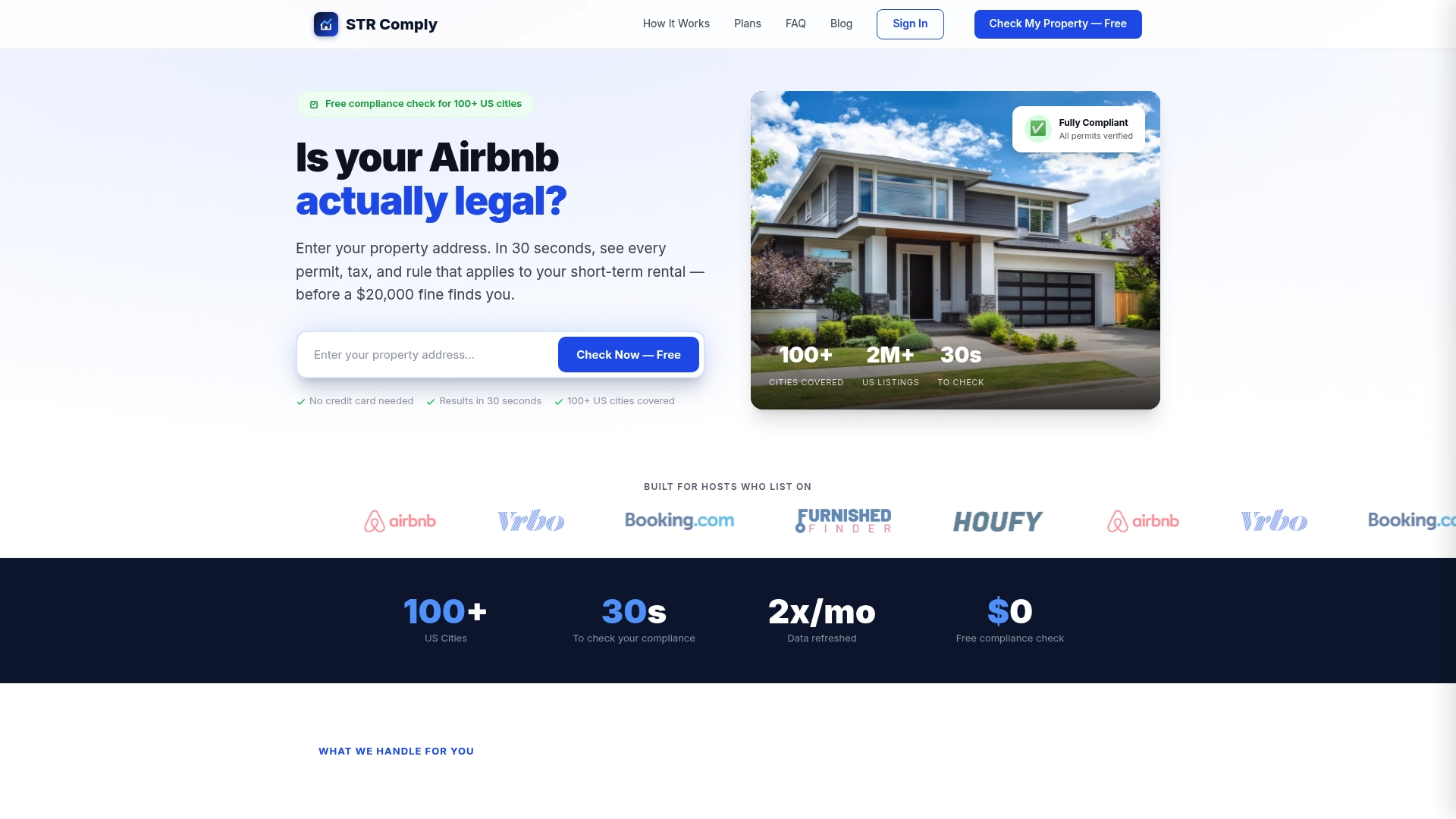
Instant compliance checks for more than 100 US cities surface permit, tax, and zoning rules tied to a property address. The site offers a free single-property check and paid plans that add a portfolio dashboard, permit tracking, renewal alerts, and regulatory updates. That mix reduces the need for manual legal research before listing on Airbnb or VRBO.
Core Features
STR Comply operates as a SaaS platform that centralizes city-level short-term rental rules into searchable reports. The site returns city-specific summaries showing permit requirements, transient occupancy tax obligations, and operational restrictions, and it adds automated tracking with renewal reminders and regulation change alerts. Hosts can manage several listings from a single dashboard and set alerts to follow permit expirations.
Key Differentiator
The site delivers instant, city-specific compliance summaries for more than 100 US cities tailored specifically to short-term rental hosts. That focus on property-level legal detail lets hosts see permit and tax obligations without digging through municipal codes. For hosts working in several markets, the ability to compare locality rules alongside renewal schedules saves research time and reduces missed deadlines.
Pros
The vendor advertises quick, 30-second compliance reports for single-property checks, which can get a host to a usable summary faster than manual searches. Coverage across 100-plus cities makes the site practical for owners who list on multiple platforms. Paid plans add a centralized dashboard and automated reminders, which help managers keep track of renewals and reduce the chance of fines or delisting.
Cons
- Does not provide legal advice or issue official permits; it summarizes public regulatory information only.
Who It’s For
Hosts, property managers, and real estate investors who operate short-term rentals in the United States and need rapid regulatory clarity will find the site useful. Smaller hosts who want a free single-property check can get immediate guidance. Managers with portfolios benefit from paid plans that consolidate permit status and renewal dates across markets.
Unique Value Proposition
Free single-property checks plus paid portfolio plans with a single dashboard and renewal alerts let hosts replace time spent on municipal websites with one reference point. That configuration lowers the ongoing cost of compliance tracking compared with hiring outside counsel or running manual checks for each listing. The result is a faster path to identifying permit gaps and tax obligations across markets.
Real World Use Case
A Los Angeles property owner enters her address and receives a city-specific report listing required permits, applicable transient occupancy taxes, and neighborhood operating restrictions. She activates auto-reminders for permit renewals and watches regulation change alerts in the dashboard. The alerts reduce the risk of expired permits and potential fines.
Website: https://strcomply.us
Azora Software
At a Glance
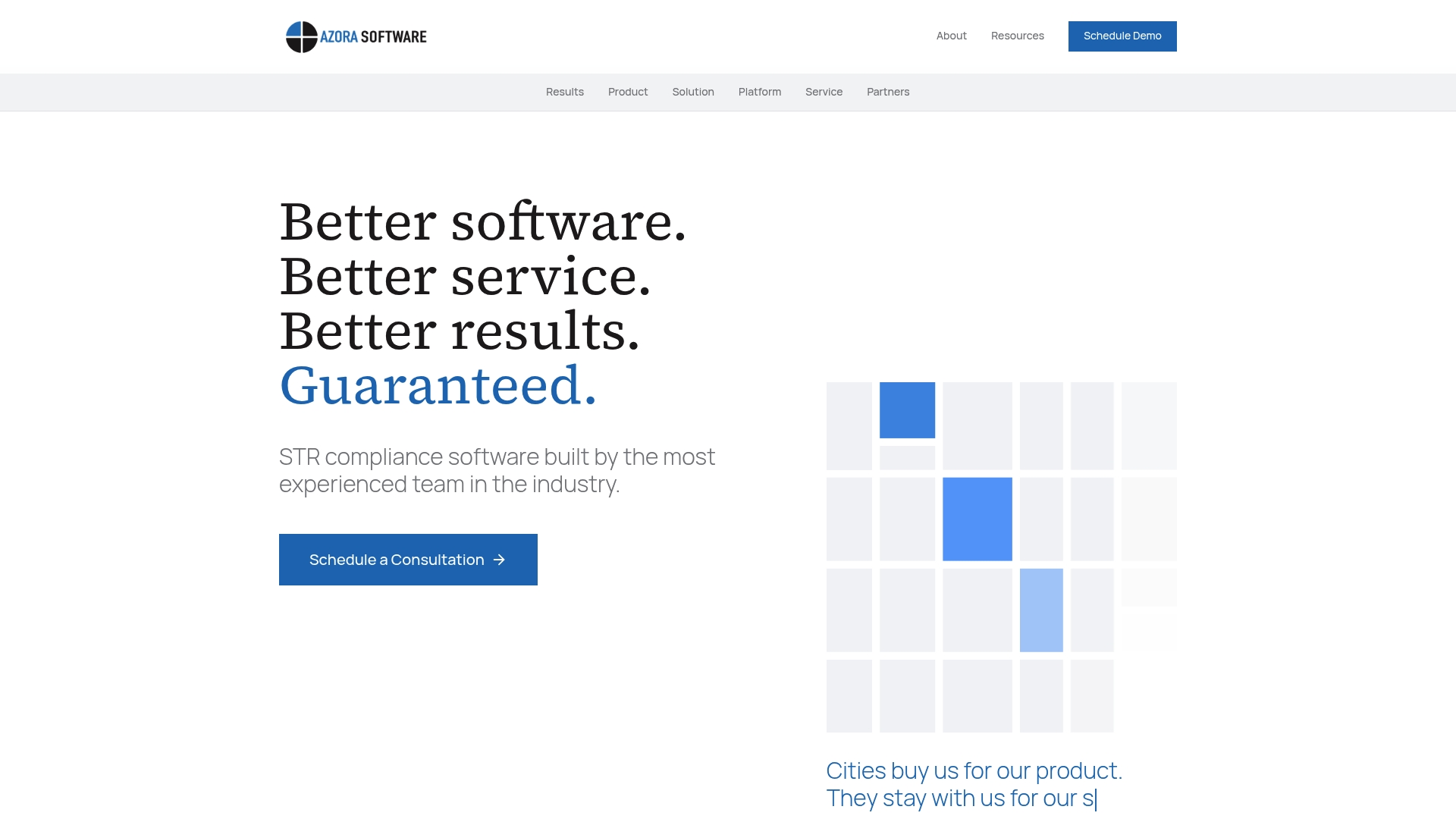
According to the company, Azora aggregates data from over 75 sources and reports faster deployment and higher compliance rates for municipal programs. The platform focuses on discovery, permitting, tax reporting, inspections, complaints, and evidence reporting. That combination aims to shorten the time between detection and enforcement while producing audit ready records.
Core Features
Azora centralizes discovery and links property records to county GIS and address databases, which helps identify unpermitted short term rentals. The system manages the full permit lifecycle, with application intake, renewals, and enforcement tracking, and it includes tax reporting and remittance workflows to support audits. Inspection workflows, complaint tracking, and evidence generation tie case activity together and connect with existing municipal systems.
Key Differentiator
Azora’s standout capability is its focus on geospatially accurate discovery tied to address databases and municipal systems. That emphasis on address identification feeds permit and enforcement modules with verified location data. Municipal agencies that need defensible evidence for fines or hearings will find that approach valuable.
Pros
Azora reports faster deployment and shorter ramp times compared with alternatives, which reduces the calendar time to start enforcement. The platform’s address identification and discovery tools produce higher match accuracy for candidate properties, which lowers false positives and wasted staff time. Customers benefit from dedicated local government support and measurable evidence generation for audits and enforcement actions.
Cons
- Training and onboarding require dedicated staff time. The platform’s complexity means municipal teams should plan formal training and internal champions.
- Scalability details are not fully documented. The vendor does not publish limits for extremely large or highly complex jurisdictions.
- Long term user feedback is limited in public reviews. That makes it harder to judge multi year operational costs and maintenance needs.
When It May Not Fit
Azora may not fit jurisdictions without staff available for initial setup and data reconciliation. Small towns with a handful of listings may find the platform more than they need. Agencies that rely on incomplete or inconsistent local data should expect the platform’s effectiveness to track with data quality.
Who It’s For
Azora targets municipal government agencies that manage short term rental rules across many neighborhoods. It suits housing and code enforcement teams that require audit ready evidence and tighter links between discovery and enforcement. It is not primarily aimed at individual hosts or small property managers.
Real World Use Case
A midsize city uses Azora to scan county GIS and tax records, then flags likely short term rentals for inspection. The city issues permits through the platform, tracks complaints, and stores inspection photos as evidence for hearings. The integrated tax reporting module helps the finance office reconcile remittances for audits.
Pricing
Pricing is not publicly listed. Fees are likely customized by municipality size, feature set, and integration scope. Procurement will probably require a formal quote and implementation estimate.
Website: https://azorasoftware.com
Lodge Compliance
At a Glance
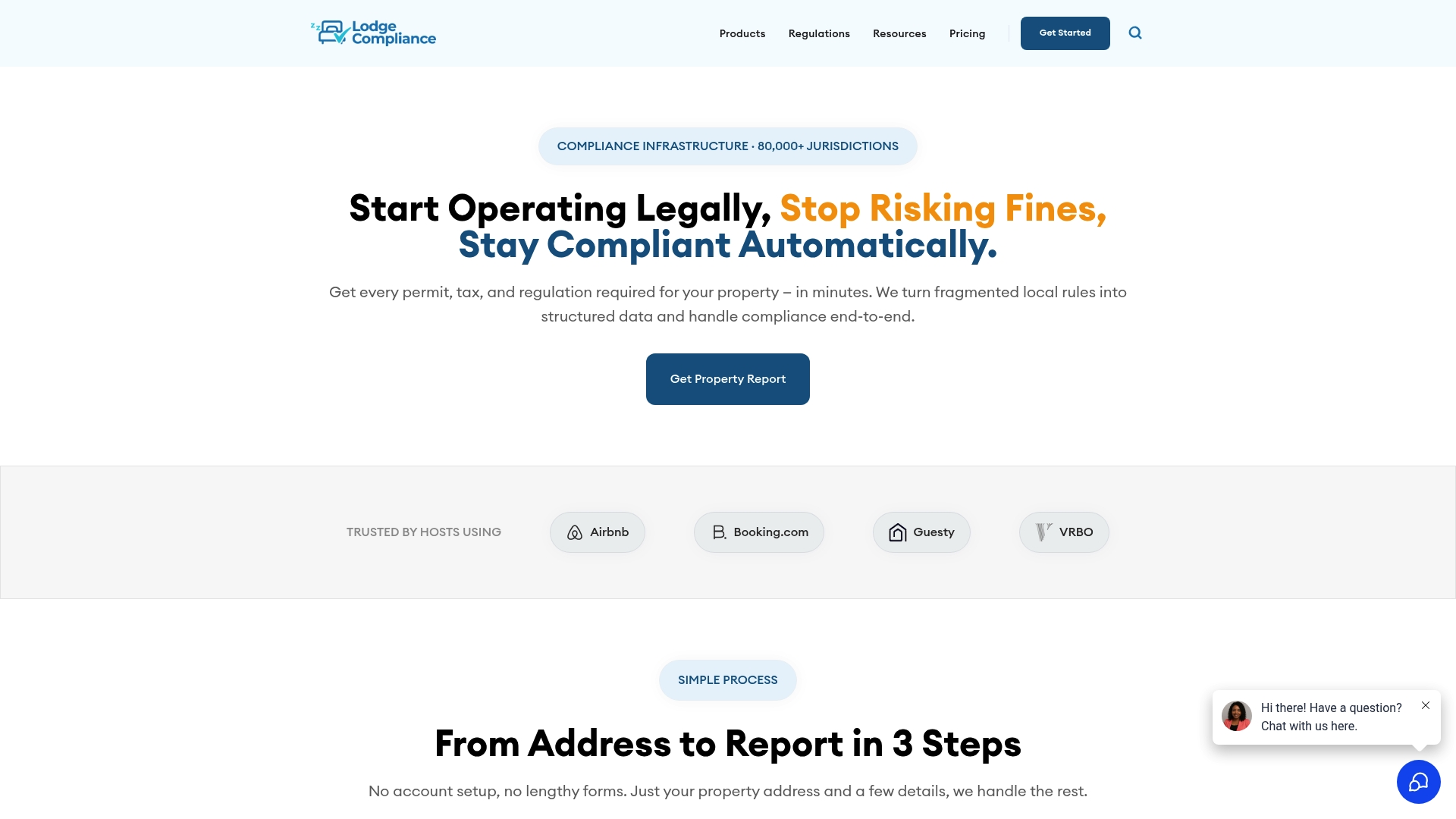
Lodge Compliance reports coverage of more than 80,000 jurisdictions across 191 countries. This global scope targets lodging and short-term rental rules at city and municipal levels. The platform combines permit management, tax remittance, and guest registration into a single workflow.
Core Features
The platform automates compliance tracking and manages permit and license applications while connecting to property management systems through an API. It calculates taxes and supports automated remittance, and it keeps real-time jurisdictional updates to reflect rule changes. The Host Manager includes guest registration, identity verification, and access control to align guest onboarding with local requirements.
Key Differentiator
Lodge Compliance centers on wide geographic coverage and automation that link regulatory data with booking platforms and PMS tools. That coverage claim makes it easier for operators with cross-border portfolios to compare local rules without custom research. The integration focus aims to reduce manual data entry between bookings and compliance records.
Pros
The automation cuts manual paperwork by routing permit applications, renewals, and tax calculations through tracked workflows. That reduces the administrative load for portfolio managers and lowers the chance of fines from missed renewals. Integration with major booking platforms and PMS products helps keep listing status and remittance aligned with bookings, and the Host Manager provides a compliant guest intake process tied to registration needs.
Cons
- Pricing details are not listed on the site, so you will likely need a custom quote for medium or large portfolios.
- Complex local rules still sometimes require outside legal advice for edge cases or unique zoning questions.
- The vendor lists a Ledger product under development, so its functionality and costs are not yet available.
When It May Not Fit
If you manage a very small portfolio and prefer fixed, transparent pricing, Lodge Compliance may feel expensive or opaque. If your operation requires on-demand legal interpretations for atypical cases, a standalone attorney will still be necessary. Organizations that need immediate visibility into Ledger functionality should wait until that product publishes specs and pricing.
Who It’s For
This product fits property managers and owners running multiple listings across cities and countries who need automated permit and tax workflows. Platform providers that want to embed compliance checks into listing flows will find the API useful. Local government agencies seeking data for enforcement or registration can also use the reporting features.
Real World Use Case
A management company uses Lodge Compliance to track permit expirations, submit renewals, and remit occupancy taxes for more than 100 properties across regions. The system pulls booking data from the PMS to calculate taxes and flags listings missing required licenses. Managers receive compliance reports that they can share with owners and local authorities.
Pricing
Pricing is not explicitly listed on the website. The vendor appears to offer custom quotes or tiered plans based on portfolio size and integration needs. Expect to contact sales for an enterprise or portfolio-based rate.
Website: https://lodgecompliance.com
Tenac Solutions
At a Glance
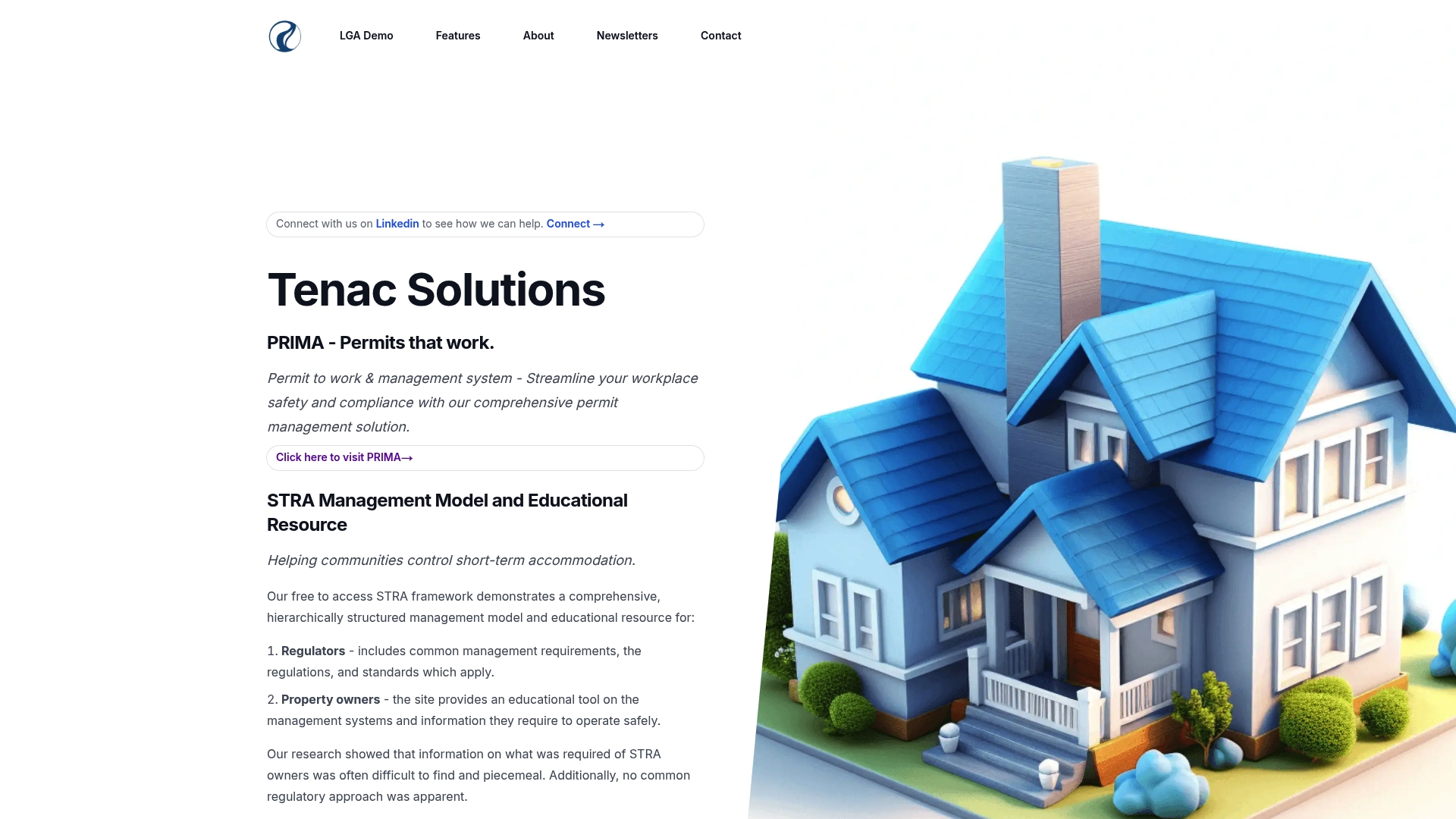
Purpose-built for local government regulators in Australia, Tenac Solutions concentrates on permit and compliance workflows for short-term rentals. The system combines licensing, complaint logging, and enforcement functions in a single toolset. That focus suits councils and regulatory teams that must manage many listings across neighborhoods.
Core Features
Tenac Solutions bundles a permit to work and management system with property licensing and document uploads, so licensing evidence stays attached to records. The platform includes complaint logging, compliance audits, and follow-up procedures that link enforcement actions to specific properties. Dashboards and data visualization present case loads and compliance trends to regulators.
Key Differentiator
Tenac Solutions stands out because it was built explicitly for local authorities managing short-term rental markets in Australia. The product maps licensing, verification, and enforcement to regulatory workflows rather than to host-facing features. That orientation makes it practical for councils that need audit trails and enforceable records.
Pros
The system supports automated verification steps and structured record keeping for enforcement officers. That reduces manual document chasing and helps build evidence for citations. Tenac Solutions also provides educational frameworks for regulators and property owners, which aids consistent community messaging and policy rollout.
Cons
- Third-party reviews and trust signals are limited, making independent buyer assessment difficult.
- The platform is specialized and may not suit non-regulatory users, such as individual hosts or small property managers.
- Some users may find implementation complex without formal training and internal process changes.
When It May Not Fit
If your operation provides services to individual hosts rather than to government, this product may not match your workflow. Small towns without active enforcement programs may not get full value from the enforcement features. Teams without training resources will face a steeper onboarding curve.
Who It’s For
Local government regulators, compliance officers, and licensing teams responsible for short-term accommodation oversight will get the most value. Property licensing agencies that need verifiable documentation and audit trails will find the feature set targeted to their needs. Community regulators running education campaigns alongside enforcement will also benefit.
Real World Use Case
A city council uses Tenac Solutions to register short-term rental properties, collect license documents, and verify occupancy permits. Complaints are logged against listings and routed to inspectors for audit and action. When a property lacks a permit, the system records the enforcement step and the issued penalty.
Pricing
Not applicable — informational only. The vendor does not publish public pricing for Tenac Solutions. Local authorities should contact the vendor or request a demonstration for procurement details.
Website: https://tenacsolutions.com
Comparison of alternatives
Short-term rental compliance requires tools that align with operational demands, geographic focus, and scalability. Below is an analysis of key differences among available options.
Geographic Coverage and Integration
Lodge Compliance boasts significant international coverage, serving managers of multi-national property portfolios through automated permit management and tax remittance tied to booking platform integrations. STR Comply, on the other hand, emphasizes rapid, city-specific summaries tailored to U.S. markets, effectively meeting a diverse range of domestic hosting needs with minimal initial investment. Azora Software concentrates on municipal use cases, offering local-level enforcement tools within the confines of its operational scope.
Customizability and Target User Base
Where STR Comply targets individual hosts and small-to-medium property managers seeking streamlined entry into compliance efforts, competitors like Azora Software and Tenac Solutions address government agencies with more complex enforcement and audit priorities. This focus expands STR Comply’s accessibility to users without requiring substantial onboarding time or system integration efforts, which may be a necessity for some competitors.
Best fit
- Hosts managing properties in U.S. urban centers: STR Comply’s instant city-focused compliance reports aid insights quickly.
- Global property portfolio managers: Lodge Compliance’s wide-reaching integration capabilities ensure oversight.
- Regulators requiring precise enforcement capabilities: Azora Software’s GIS-enabled tools align discovery with effective action.
Our pick
STR Comply stands out for short-term rental hosts operating in diverse U.S. markets, offering accessible, instant compliance tools tailored to their jurisdiction. Its balance of free-key entry points and professional dashboard expansion accommodates users from single-property management to portfolio oversight, a feature less pronounced in some competitors.
Compare options for short-term rental compliance with distinct features tailored to rental managers and municipalities.
| Product | Core Feature | Key Differentiator | Best For | Pricing | Notable Limitation |
|---|---|---|---|---|---|
| Strcomply | City-specific rental policy summaries and tracking | Identifies rules for over 100 cities instantly | U.S. rental hosts managing portfolios | Free checks, paid plans | Lacks direct permit issuance functions |
| Azora Software | Compliance enforcement and GIS-based property checks | Integrates geospatial data with enforcement | Municipal regulators enforcing rental rules | Price not published | Requires structured staff training |
| Lodge Compliance | Global compliance and integrated booking platform API | Manages rules across 191 countries | Managers with cross-border rental listings | Price not published | Legal advice needed for complex local rules |
| Tenac Solutions | Licensing and enforcement suited to Australian councils | Regulatory workflows tailored to council needs | Local regulators in Australia | Price not published | Limited usability for individual property hosts |
How Property Managers and Hosts Can Address Compliance Challenges with Strcomply
Short-term rental hosts and property managers often face complex permit, tax, and zoning requirements across multiple cities. Finding clear, city-specific rules without extensive legal research can feel overwhelming. Strcomply resolves these pain points by providing instant compliance reports for over 100 U.S. cities, letting hosts quickly understand permit and transient occupancy tax obligations tied to any property address.
Strcomply offers:
- Free, single-property compliance checks
- Portfolio dashboards for managing multiple listings
- Automated renewal alerts and regulatory change notifications
Property managers and real estate investors operating in diverse markets reduce costly risks and avoid missed deadlines. Learn more at Strcomply to make compliance monitoring effortless and reliable now.
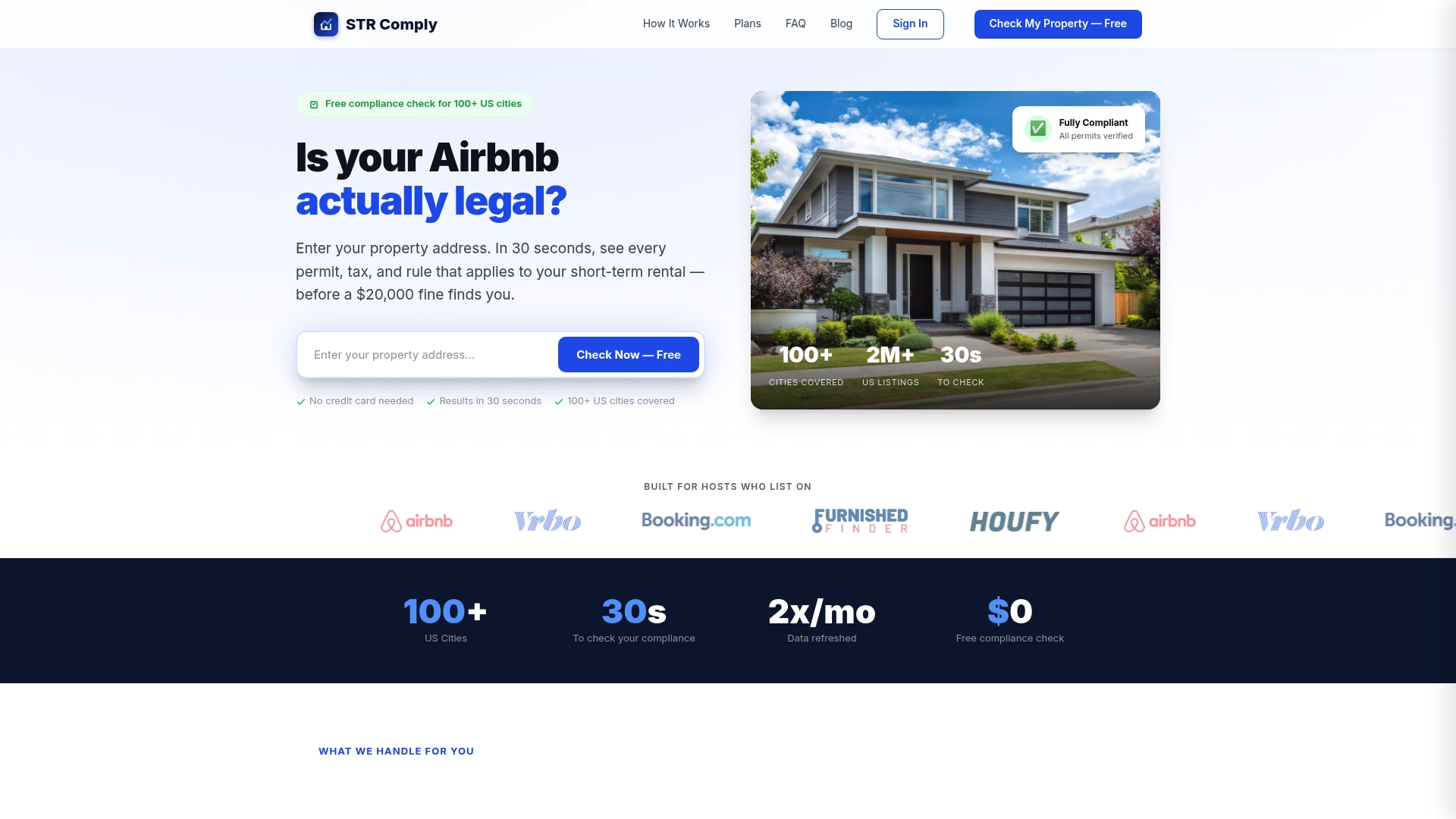
Visit Strcomply and use the free tool to verify your property compliance instantly. Activate portfolio features to track permits and taxes across listings efficiently.
FAQ
How quickly does Strcomply provide compliance reports?
Strcomply generates compliance reports in just 30 seconds for single-property checks. This quick turnaround allows hosts to access usable summaries faster than with manual searches. Users should expect to receive immediate guidance on their property’s compliance needs.
What is the difference between Strcomply and Azora in terms of deployment speed?
Azora reports faster deployment times compared to other alternatives, which can lead to shorter ramp times for enforcement. Strcomply, while efficient, primarily excels in providing instant, city-specific compliance summaries for various properties. Consider using Azora if rapid deployment is a top priority, particularly for municipal agencies.
Which platform offers automated renewal reminders for short-term rental permits?
Strcomply features automated tracking with renewal reminders, making it easier for hosts to manage their permit statuses. This capability ensures that hosts are informed about upcoming permit expirations, reducing the risk of fines. Hosts can rely on this feature for proactive compliance management.
Can I expect legal advice with Strcomply?
Strcomply does not provide legal advice; it summarizes public regulatory information only. This means users should still consult legal professionals for nuanced or complex legal questions that may arise from their specific situations. Utilizing Strcomply can still provide a solid foundation for compliance without direct legal counsel.
Does Strcomply cover compliance in multiple cities?
Yes, Strcomply operates in over 100 US cities, delivering compliance summaries tailored to short-term rental hosts. This extensive coverage helps users manage requirements across various localities efficiently. Users can benefit from its city-specific compliance insights while managing multiple listings.
Recommended
Check your city's STR regulations
Free compliance reports for 100+ US cities. Permits, taxes, zoning — all in one place.
Check My Address — Free