
Permit renewal for vacation rentals is the official process by which hosts extend their legal authorization to operate a short-term rental property, typically required annually to satisfy local government requirements. Known in regulatory terms as short-term rental license renewal, this process involves submitting updated documentation, paying renewal fees, and confirming continued compliance with zoning, insurance, and tax obligations. Cities like Austin, Nashville, and Sarasota each enforce distinct timelines and fee structures, and missing a deadline carries real financial consequences. This guide breaks down exactly what the process involves, how it varies by market, and what you need to do to stay compliant in 2026.
What is permit renewal for vacation rentals?
Permit renewal for vacation rentals is the mandatory annual process of extending a short-term rental license so a host can continue legally renting their property. Most jurisdictions treat the renewal as a compliance audit, not simply a fee payment. That means your property must still meet current safety codes, insurance minimums, and occupancy standards at the time of renewal, not just when you first applied.
The renewal cycle exists because local regulations evolve. A property that qualified under 2023 zoning rules may face new restrictions by 2026. Renewal forces a periodic check that your listing still fits within current legal parameters. For hosts on Airbnb or VRBO, this matters directly: platforms increasingly require proof of a valid permit to keep listings active.

Most short-term rental permits require annual renewal within 365 days or by calendar year end. That means your renewal window is predictable, but only if you track it. Hosts who treat permit expiration as a background detail often discover the problem only after a fine arrives or a listing gets flagged.
What are the typical steps for renewing a vacation rental permit?
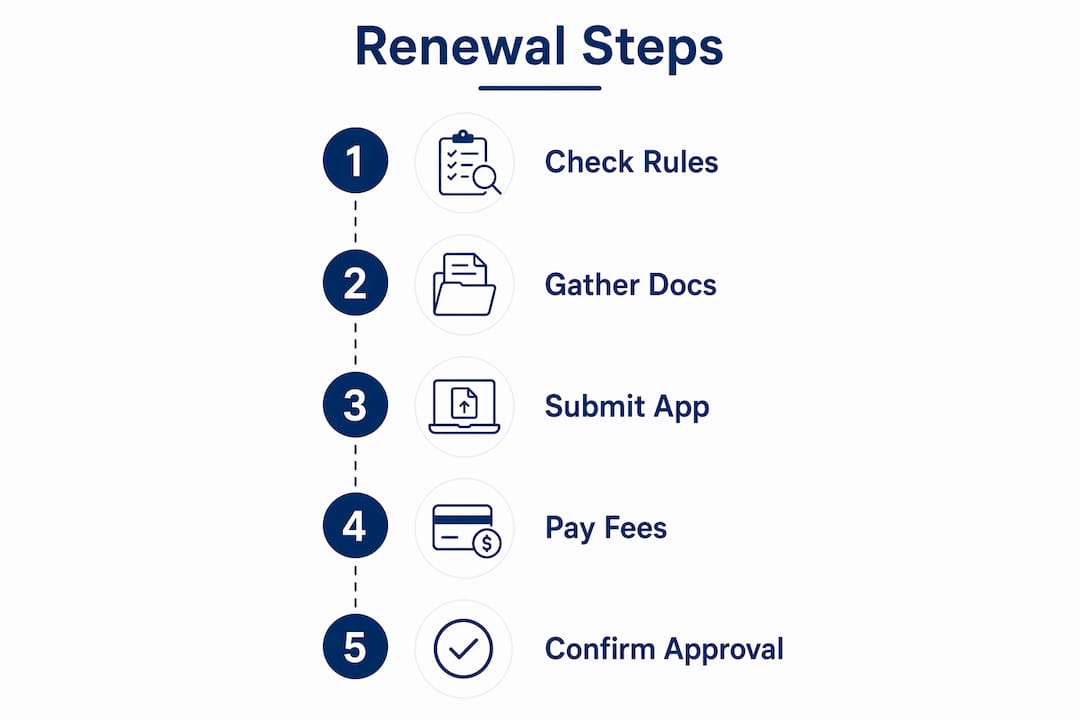
The holiday home permit process follows a consistent pattern across most U.S. jurisdictions, even though the specific documents and fees differ. Here is the standard sequence:
-
Confirm your renewal window. Most cities open renewal applications 60 to 90 days before the permit expiration date. Nashville, for example, sends renewal notices to the address on file, but it is your responsibility to submit on time regardless of whether you receive that notice.
-
Gather required documentation. Common requirements include proof of transient occupancy tax payments, current liability insurance certificates, updated owner contact information, and in some jurisdictions, a signed affidavit confirming the property still meets zoning and safety standards. In Bend, Oregon, proof of rental activity during the permit period may also be required, meaning the property must have been rented at least once to qualify for renewal.
-
Submit the renewal application. Most cities now offer online submission through their development services portals. Nashville accepts renewal forms electronically through its codes department. Some smaller jurisdictions still require in-person or mail submissions, so verify the accepted method before the deadline.
-
Pay the renewal fee. Fees vary by city and property type. Austin charges approximately $385.30 total for short-term rental renewals, while Sarasota’s renewal fee sits at $350. Late fees range from $55 to $200 depending on the jurisdiction, and some cities impose daily fines on top of that.
-
Wait for confirmation and verify permit status. Renewal processing times can run four to six weeks. Submit early and follow up if you have not received confirmation within that window. Keep the renewed permit on file and update your listing platforms with the new permit number or expiration date.
Pro Tip: Submit your renewal application at least 45 days before expiration. Processing delays from incomplete submissions are the most common reason hosts experience a permit lapse, and a lapsed permit can trigger fines even if your renewal is pending.
How do renewal policies and fees vary across popular vacation rental markets?
Renewal requirements differ significantly across markets, and what applies in Nashville does not apply in Austin or Sarasota. The table below summarizes key differences across three major short-term rental markets.
| City | Renewal period | Renewal fee | Late penalty |
|---|---|---|---|
| Austin, TX | 2 years (some permit types) | ~$385.30 | Permit void after 30-day lapse |
| Nashville, TN | 1 year (calendar year) | Varies by type | Fines plus reapplication required |
| Sarasota, FL | 1 year | $350 | Daily fines, permit revocation |
Austin is notable for offering two-year renewal cycles on certain permit types, which reduces administrative burden for hosts managing multiple properties. However, if a permit lapses beyond 30 days, renewal is no longer possible and a full new application is required. That distinction matters because new applications trigger updated zoning reviews, additional inspections, and potentially higher fees under current rules.
Sarasota enforces strict annual renewal with no grace period extensions. Walton County, Florida, takes an even harder line, with fines for operating without a valid permit reaching $500 per day. That figure is not a worst-case scenario. It is the published enforcement rate for confirmed violations.
Ownership changes add another layer of complexity. If a property changes hands, the new owner cannot simply renew the previous owner’s permit. New property owners must apply for a new permit entirely, which demands planning during any property transaction. If you are purchasing a vacation rental, factor permit requalification into your acquisition timeline.
Pro Tip: When buying a vacation rental property, request copies of the current permit and its expiration date before closing. A permit expiring within 60 days of purchase means you will need to apply for a new permit almost immediately, potentially under stricter current regulations.
What are the risks of failing to renew your vacation rental permit?
Operating a short-term rental without a valid permit is not a gray area. The consequences are specific, documented, and financially significant. Hosts who let permits lapse face the following risks:
- Daily fines. Walton County, FL enforces fines up to $500 per day for operating without a valid permit. A two-week oversight can generate a $7,000 liability before you are even notified.
- Permit revocation. Some jurisdictions permanently revoke permits for repeated violations, requiring a full new application under current rules. Those rules are often stricter than the ones that applied when the original permit was issued.
- Forced reapplication. Missing a renewal deadline by more than the grace period means you cannot renew. You must reapply, which involves inspections, updated documentation, and no guarantee of approval if zoning has changed.
- Platform de-listing. Airbnb and VRBO increasingly cross-reference permit data. An expired permit can trigger automatic listing suspension, cutting off rental income while you resolve the compliance issue.
- Tenant and rental agreement disputes. Unpermitted rentals can void rental agreements in some states, exposing hosts to liability if a guest dispute escalates to legal action.
“Hosts should view renewal as an obligatory audit, not an administrative formality. The process confirms that your property still meets the safety, insurance, and occupancy standards your guests and local government expect.”
Reviewing your legal penalties exposure before a violation occurs is far less costly than addressing fines after the fact. The financial and operational risks of non-compliance are concrete and avoidable.
How can hosts effectively track and manage vacation rental permit renewals?
Tracking permit renewals across one property is manageable. Tracking them across five or ten properties in different jurisdictions requires a system. Here is what works in practice:
- Use property management software with permit tracking. Platforms like Hostaway include permit expiration tracking within their property management tools, allowing hosts to see upcoming renewal dates across their portfolio in one view.
- Set calendar reminders at 90, 60, and 30 days before expiration. Three reminders give you time to gather documents, submit early, and follow up on processing status without rushing.
- Prepare a renewal document folder for each property. Store current insurance certificates, tax payment records, and owner contact details in a dedicated folder. When renewal season arrives, you are not scrambling to locate documents.
- Verify permit status after submission. Do not assume approval. Check the issuing authority’s portal or contact the department directly to confirm your renewed permit is active before the old one expires.
- Know when a renewal becomes a new application. If ownership has changed or the permit has lapsed beyond the jurisdiction’s grace period, a renewal form will not be accepted. Submitting a renewal when a new application is required wastes time and delays your legal operating status.
Understanding vacation rental permit requirements across your specific markets is the foundation of any tracking system. Regulations change, and a process that worked in 2024 may have new documentation requirements in 2026.
Pro Tip: Build a simple spreadsheet with each property’s permit number, issuing authority, expiration date, and renewal fee. Review it monthly. This takes less than 10 minutes and prevents the most common cause of permit lapses: forgetting.
Key takeaways
Permit renewal for vacation rentals is a mandatory annual compliance process, and missing it triggers fines, forced reapplication, and potential listing suspension.
| Point | Details |
|---|---|
| Renewal is a compliance audit | Hosts must confirm current safety, insurance, and occupancy standards, not just pay a fee. |
| Fees and timelines vary by city | Austin charges ~$385.30 with some 2-year cycles; Sarasota charges $350 annually; late fees add $55 to $200. |
| Lapsed permits require new applications | Missing the grace period in cities like Austin means reapplying under current, often stricter, zoning rules. |
| Ownership changes void renewal eligibility | New property owners must apply for a new permit rather than renewing the previous owner’s license. |
| Early submission prevents lapses | Processing takes four to six weeks; submitting 45 days early protects against delays causing permit expiration. |
Why most permit renewal problems are self-inflicted
After working with short-term rental hosts across dozens of U.S. markets, the pattern is consistent: the vast majority of permit renewal problems are not caused by complex regulations. They are caused by hosts treating renewal as something to handle later.
The distinction between a renewal and a new application is where I see the most costly mistakes. A host in Austin who misses the 30-day grace period does not just pay a late fee. They restart the entire application process under 2026 zoning rules, which in many neighborhoods are more restrictive than when they originally qualified. That can mean losing the permit entirely if the property no longer meets current standards.
Ownership change situations are equally misunderstood. I have seen property managers assume they can transfer a permit to a new owner as part of a sale. They cannot. The new owner must qualify independently, and in markets where permit caps exist, there is no guarantee a new permit will be issued at all. This is a detail that belongs in every purchase agreement for a short-term rental property.
My honest advice: treat your permit expiration date with the same urgency as your mortgage payment. The financial exposure from operating without a valid permit, even for a few days, exceeds the cost of any renewal fee. Build the tracking system before you need it, not after you receive a fine notice.
Proactive compliance is not bureaucratic caution. It is how professional hosts protect their income.
— Jure
How Strcomply simplifies your permit renewal process

Managing short-term rental permit renewal across multiple properties and jurisdictions is where compliance tracking tools earn their value. Strcomply is built specifically for this. The platform stores permit details for each property, sends renewal deadline alerts before expiration windows close, and provides city-specific compliance summaries covering permit requirements, tax obligations, and zoning restrictions.
For property managers handling portfolios across markets like Austin, Nashville, and Sarasota, Strcomply’s dashboard consolidates renewal timelines and regulatory updates in one place. You can manage your STR compliance without conducting separate research for each jurisdiction every renewal cycle. Whether you manage one property or fifty, Strcomply reduces the risk of a missed renewal and the penalties that follow.
FAQ
What is permit renewal for vacation rentals?
Permit renewal for vacation rentals is the annual process of extending a short-term rental license to maintain legal operating status. It typically requires submitting updated documentation, paying renewal fees, and confirming the property still meets current local regulations.
How often do vacation rental permits need to be renewed?
Most short-term rental permits require annual renewal, though some jurisdictions like Austin offer two-year cycles for certain permit types. Always verify the renewal period with your specific issuing authority.
What happens if you miss a vacation rental permit renewal deadline?
Missing a renewal deadline triggers late fees ranging from $55 to $200, and operating without a valid permit can result in daily fines up to $500 in jurisdictions like Walton County, FL. If the permit lapses beyond the grace period, a full new application is required instead of a renewal.
Can a new property owner renew an existing vacation rental permit?
No. When ownership changes, the new owner must submit a new permit application rather than renewing the previous owner’s license. This process requires requalification under current zoning and safety rules, which may differ from the original permit conditions.
What documents are typically required for vacation rental permit renewal?
Standard renewal documentation includes proof of transient occupancy tax payments, current liability insurance certificates, and updated owner contact information. Some jurisdictions, including Bend, Oregon, also require proof of rental activity during the permit period to confirm the property was actively used as a short-term rental.
Recommended
Check your city's STR regulations
Free compliance reports for 100+ US cities. Permits, taxes, zoning — all in one place.
Check My Address — Free