
Getting your VRBO host permit instructions right is the difference between a live listing and an automatic delisting. VRBO itself does not require a platform-level permit to create a listing, but local governments nearly always mandate short-term rental permits before you can legally operate. In cities like New York City, Austin, Portland, and San Antonio, VRBO actively verifies permit numbers and removes unpermitted properties from the platform. Failing to comply exposes you to fines, legal action, and lost rental income. This guide covers every step of the short-term rental permit process, from application to renewal, so your listing stays active and your business stays protected.
What VRBO host permit instructions require you to obtain
Most VRBO hosts need more than one type of registration before their listing can go live. The exact combination depends on your city or county, but the core categories are consistent across most U.S. jurisdictions.
Common permit and registration types
- Short-term rental (STR) permit or license. Issued by your city or county government, this is the primary document that authorizes you to rent your property to guests for short stays. Many cities cap the number of permits issued per neighborhood or per owner.
- Transient Occupancy Tax (TOT) certificate. Most jurisdictions require hosts to register for a TOT certificate before collecting or remitting occupancy taxes. Some jurisdictions require monthly filings, and failure to remit on time results in fines and can jeopardize your hosting eligibility.
- Business license or business tax certificate. Several cities require this separately from the STR permit. Hosts who do not own the property must also obtain a business tax certificate before applying for an STR permit.
- Safety inspections or certifications. Some municipalities require a fire safety inspection, smoke detector certification, or carbon monoxide compliance check before issuing a permit.
- HOA or building approval. If your property sits within a homeowners association, you may need written approval before applying. Operational restrictions from HOAs can override local permits entirely.
The table below summarizes the most common requirements and where they typically apply.
| Requirement | Who typically mandates it | Notes |
|---|---|---|
| STR permit or license | City or county government | Required in most major U.S. markets |
| TOT certificate | City, county, or state | Needed before collecting guest taxes |
| Business license | City government | Required in some cities for non-owner hosts |
| Safety inspection | Local fire or building department | Often required at initial application |
| HOA approval | Homeowners association | Overrides local permits if HOA bans STRs |
Always verify requirements directly on your local government’s official website. Rules change frequently, and relying on outdated information is one of the most common reasons hosts face permit denials.
How to apply for a VRBO host permit step by step
Following a clear sequence reduces errors and speeds up approval. The steps below reflect the standard process across most U.S. cities.
-
Research your local regulations. Visit your city or county government website and search for “short-term rental permit” or “vacation rental license.” Confirm which permits you need, what the fees are, and whether your property’s zoning classification allows short-term rentals at all.
-
Gather your documentation. Standard documents include proof of ownership (deed or mortgage statement), a government-issued ID, proof of primary residency if required, and your property’s address and parcel number. If you are not the owner, you will need a signed authorization letter from the owner plus your own business tax certificate.
-
Register for a Transient Occupancy Tax account. Many cities require you to set up your TOT account before submitting your STR permit application. Complete this step first to avoid delays.
-
Complete the permit application. Most cities now offer online portals for STR permit applications. Fill out all fields accurately. Errors or missing information are the leading cause of processing delays.
-
Notify neighbors if required. Certain cities require you to send formal written notification to adjacent property owners before your application is approved. Failure to provide proof of notification is a documented reason for application denial in cities like Spokane, Washington. Keep copies of all notification letters and any responses you receive.
-
Pay application fees and schedule inspections. Fee amounts vary widely by city. Some jurisdictions also require a fire safety or building inspection before issuing the permit. Schedule these promptly to avoid delays.
-
Wait for approval and receive your permit number. Processing times range from a few days to several weeks depending on the city. Once approved, you will receive an official permit number.
-
Enter your permit number into your VRBO listing. VRBO requires hosts to add permit numbers directly to their listing in markets where local law mandates disclosure. Without a valid permit number, your listing may not go live or may be removed.
Pro Tip: Set a calendar reminder the day you submit your application. Track the expected processing time so you can follow up with the permitting office before your target launch date.
Ongoing compliance requirements after you receive your permit

Receiving your permit is not the end of your compliance obligations. Permit compliance is an ongoing operational requirement with renewal deadlines and strict operating conditions that hosts must actively manage.
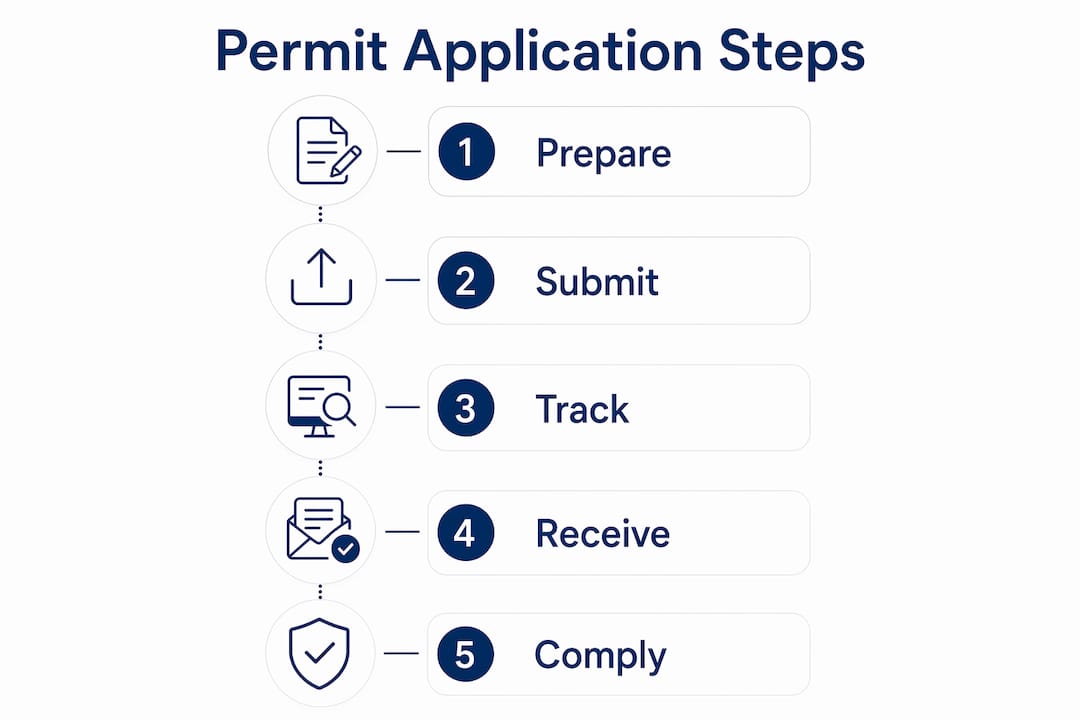
Annual renewals and fee deadlines
Most STR permits require annual renewal. Missing a renewal deadline causes your permit to lapse, which can trigger automatic delisting on VRBO. Track your permit renewal date from the day you receive approval and set reminders at least 60 days in advance.
Tax remittance
Collecting and remitting occupancy taxes on time is a legal requirement in virtually every jurisdiction that allows short-term rentals. Some cities require monthly filings rather than quarterly or annual ones. Late or missing remittances result in penalties that compound quickly.
Zoning and occupancy limits
Your permit specifies the maximum number of guests allowed per night and may restrict the number of nights you can rent per year. Exceeding these limits violates your permit conditions and can result in revocation.
Safety and accessibility
Keep smoke detectors, carbon monoxide detectors, and fire extinguishers in working order. Some cities conduct random inspections of permitted properties. A failed inspection can suspend your permit mid-season.
Pro Tip: Create a compliance calendar with three recurring entries: permit renewal deadline, TOT filing dates, and annual safety equipment check. Review it at the start of each quarter.
- Keep your VRBO listing updated with your current permit number whenever you renew.
- Respond promptly to any inquiry from your local permitting office or VRBO’s trust and safety team.
- Document every guest stay, tax payment, and permit renewal in a single folder for easy reference during audits.
Non-compliance does not just risk fines. VRBO cooperates with local governments on permit verification and actively delists non-compliant properties. A single lapsed permit can take your listing offline during your highest-earning season.
Troubleshooting common VRBO permit problems
Even well-prepared hosts run into obstacles. Knowing the most common problems in advance lets you resolve them faster.
Missing or invalid permit number
VRBO’s listing system flags permit fields that are blank or contain unrecognized numbers. If your listing is not going live, verify that the permit number you entered matches exactly what appears on your official permit document. Contact your local permitting office to confirm the number format they report to VRBO.
Permit non-transferability
Short-term rental permits are property-specific and non-transferable. If you purchased a property that previously operated as a vacation rental, the prior owner’s permit does not carry over to you. You must apply for a new permit in your own name and register for TOT before submitting that application.
Neighbor notification failures
Several cities require documented proof that you notified adjacent neighbors before your permit is approved. Insufficient or missing notification letters are a leading cause of application denial. Use certified mail or a city-approved notification method and retain all receipts.
HOA and zoning conflicts
An STR permit from the city does not override an HOA prohibition on short-term rentals. Check your HOA’s CC&Rs before applying. If your property is in a zone that restricts short-term rentals, a city permit will not protect you from enforcement action.
Hosts who treat permit compliance as a one-time task rather than an ongoing responsibility are the ones who face mid-season suspensions. The permit is the starting point, not the finish line.
Late renewals
A permit that lapses even briefly can trigger a VRBO listing suspension. If you miss a renewal deadline, contact your local permitting office immediately. Many cities offer a grace period, but you must request it proactively. Do not wait for VRBO to notify you of a problem.
Key takeaways
Obtaining and maintaining a VRBO host permit requires completing local government applications, registering for occupancy taxes, and tracking annual renewal deadlines without exception.
| Point | Details |
|---|---|
| Permits are locally mandated | VRBO does not issue permits; your city or county government does, and requirements vary by jurisdiction. |
| TOT registration comes first | Register for a Transient Occupancy Tax account before submitting your STR permit application in most cities. |
| Permits are non-transferable | New property owners must apply for a fresh permit and cannot use the previous owner’s registration. |
| Neighbor notification matters | Missing formal neighbor notification letters is a documented cause of permit denial in multiple U.S. cities. |
| Renewals require active tracking | Annual permit renewals and tax filing deadlines must be tracked proactively to prevent mid-season listing suspensions. |
Why I treat permit compliance as a core business function
Hosts often ask me whether permit compliance is really worth the administrative effort, especially for a single property. My answer is always the same: yes, without question.
The hosts I have seen struggle most are the ones who secured their permit once and then forgot about it. They missed a renewal, skipped a TOT filing, or failed to update their VRBO listing after a permit number changed. The result was a delisted property during peak season, lost bookings, and weeks spent navigating local government offices to reinstate everything.
The hosts who operate without interruption treat their STR permit the same way a restaurant treats its health department license. It is not a box to check once. It is a living document with deadlines, conditions, and consequences. They build renewal dates into their business calendar, file taxes on schedule, and respond to every official inquiry within 24 hours.
One practical habit I recommend is maintaining a single compliance folder, physical or digital, that holds your current permit, TOT registration, proof of neighbor notifications, and inspection records. When VRBO or a local authority asks for documentation, you can respond the same day. That speed builds credibility and almost always resolves issues before they escalate.
VRBO’s platform safety features, like verified guest accounts and minimum age settings, complement legal compliance by reducing nuisance complaints that can trigger permit reviews. Using every tool available, both legal and platform-based, is the mark of a host who plans to operate long-term.
Permit compliance is not a burden. It is the foundation that makes everything else in your hosting business possible.
— Jure
How Strcomply helps VRBO hosts stay compliant
Managing permit deadlines, tax filings, and regulatory updates across one or more properties is a real operational challenge. Strcomply is built specifically for VRBO hosts and short-term rental operators who need a reliable system to track it all.
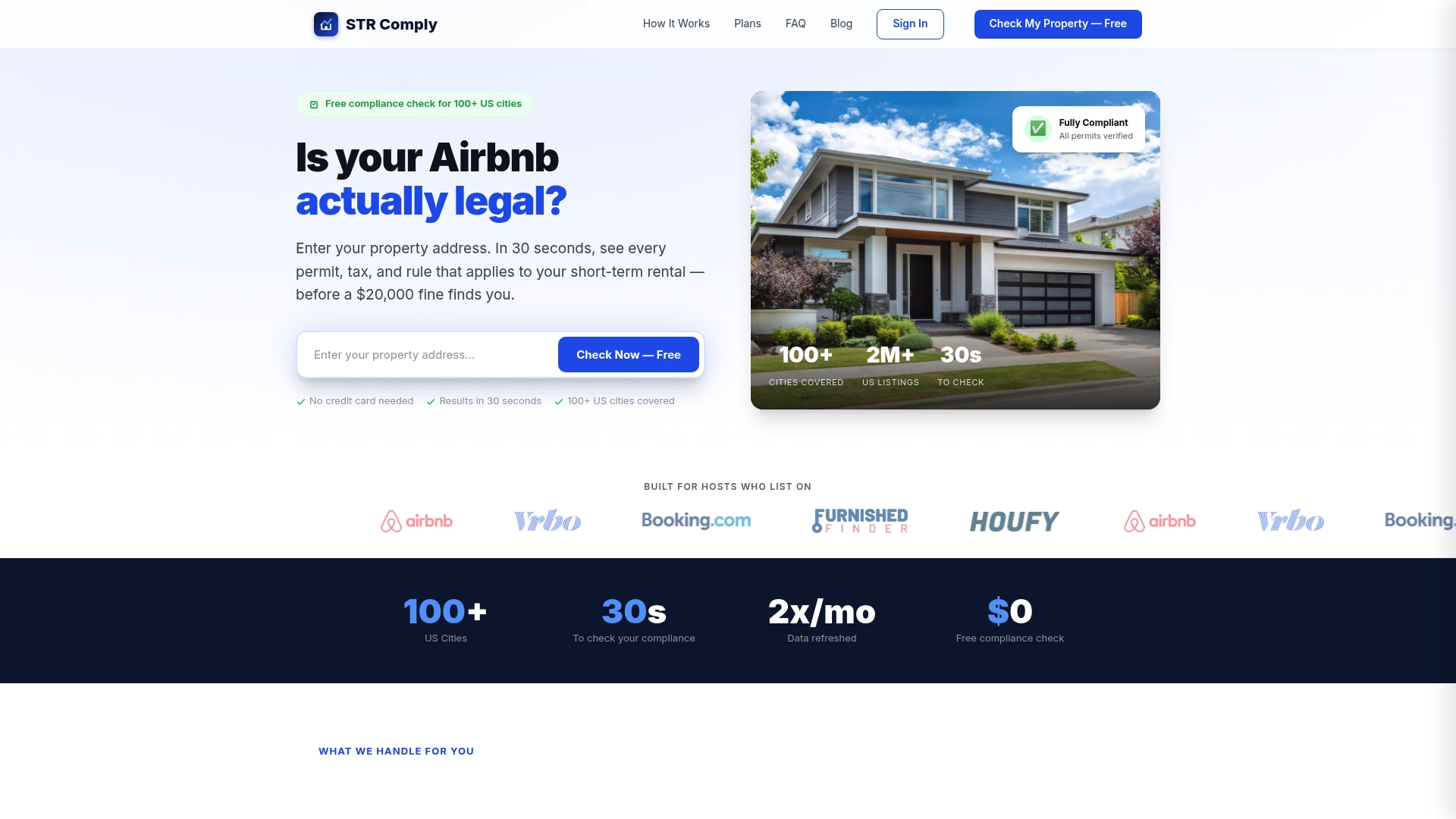
Strcomply’s platform gives you a centralized compliance dashboard where you can monitor permit renewal deadlines, receive automated renewal alerts, and access city-specific summaries of permit requirements, tax obligations, and zoning rules. The free compliance check tool lets you instantly verify whether your property meets local regulations before you even apply. For hosts managing multiple properties, paid plans include portfolio-level tracking and regulatory update notifications so nothing slips through. Visit Strcomply to check your property’s compliance status today.
FAQ
What permits do I need to host on VRBO?
Most VRBO hosts need a short-term rental permit from their city or county, a Transient Occupancy Tax certificate, and in some cities a business license. Specific requirements vary by jurisdiction, so always check your local government’s official website.
Does VRBO verify permit numbers?
Yes. VRBO verifies permit numbers in cities where local law requires disclosure, including New York City, Austin, Portland, and San Antonio. Listings without a valid permit number in these markets may not go live or may be removed.
Can I transfer a short-term rental permit to a new owner?
No. Short-term rental permits are property-specific and non-transferable. A new owner must apply for a fresh permit and register for a TOT account independently before the property can legally operate as a vacation rental.
What happens if my permit lapses?
A lapsed permit can trigger an automatic listing suspension on VRBO. Contact your local permitting office immediately if you miss a renewal deadline, as many cities offer a grace period that you must request proactively.
How do I add my permit number to my VRBO listing?
Log into your VRBO host account, navigate to your listing’s details or regulations section, and enter your official permit number exactly as it appears on your permit document. Verify the format matches what your local government reports to VRBO to avoid verification errors.
Recommended
Check your city's STR regulations
Free compliance reports for 100+ US cities. Permits, taxes, zoning — all in one place.
Check My Address — Free